 Kadodi Media House Your media place
INZU YA MASAABA, UMUKUKA WA BUGISU, OR BUGISU CULTURAL INSTITUTION?
Mbale | January 2026
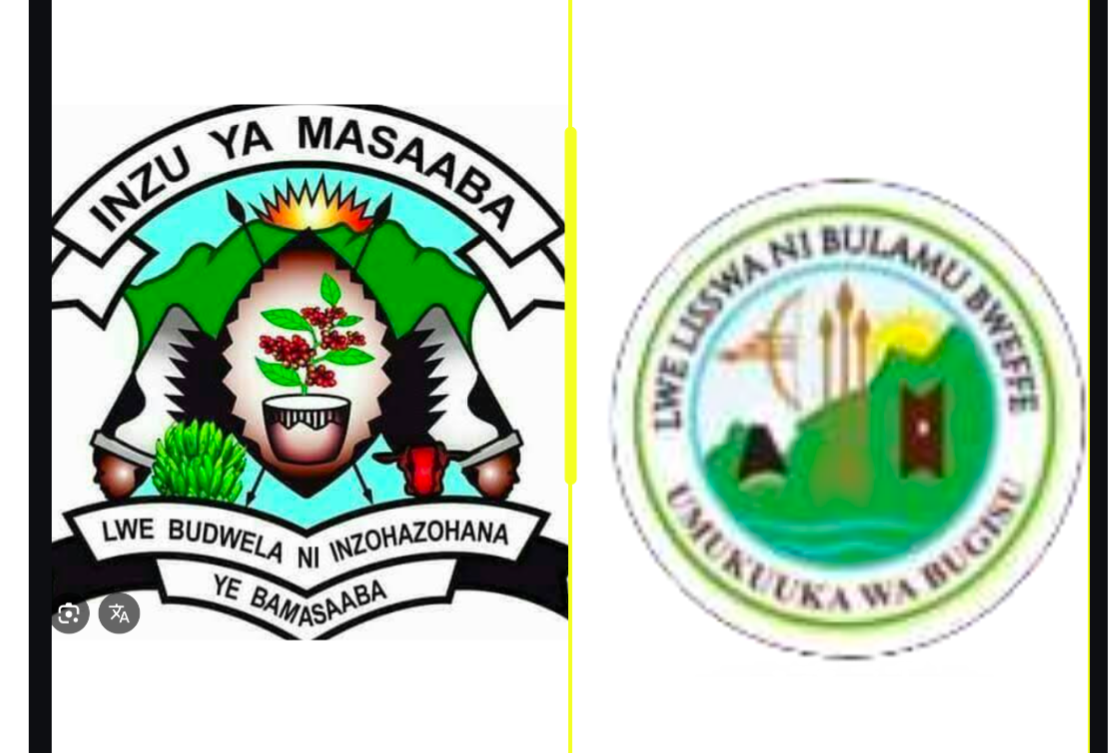
A growing public debate has emerged in Bugisu over the legitimate cultural institution representing the Bamasaaba people, following the exchange of statements between officials of the Bugisu Cultural Institution (BCI) and Inzu ya Masaaba (IYM).
At the center of the controversy is a fundamental question now being asked by citizens, leaders, and institutions alike:
Which entity is the lawful and historically recognized cultural institution of the Bamasaaba people?
Origins Matter: How Inzu ya Masaaba Was Established
Historical records and district archives indicate that Inzu ya Masaaba was formally established through resolutions of District Councils of the time, following Uganda’s decentralised governance framework. These councils, acting as legitimate representatives of the people, laid the foundation for Inzu ya Masaaba as a cultural institution grounded in:
Customary authority
Local government recognition
Collective will of the Bamasaaba clans
Crucially, these District Council resolutions have never been nullified, revoked, or overturned by any court of law or lawful authority.
Legal Continuity and Cultural Legitimacy
Cultural experts and elders note that cultural legitimacy cannot be created or extinguished by unilateral declarations, press statements, or administrative renaming. Under Uganda’s constitutional framework—particularly Article 246—cultural institutions derive legitimacy from:
Historical continuity
Customary acceptance
Community consensus
Lawful processes
In this regard, Inzu ya Masaaba continues to exist as a lawful, culturally grounded institution, whose status has not been lawfully extinguished.
Confusion Created by Competing Names
The emergence and promotion of names such as “Bugisu Cultural Institution” and “Umukuka wa Bugisu” have generated confusion among the public. Cultural analysts caution that names alone do not confer legitimacy, especially where:
No District Council resolutions are cited
No community-wide customary process is demonstrated
No lawful extinction of the original institution is proven
As one elder remarked, “You do not bury a cultural institution by words; you only change it through the people.”
The Question the Public Is Asking
With contradictory statements circulating in the public domain, citizens are now asking:
Which institution was lawfully established by the people through their councils?
Which institution reflects historical continuity of Bamasaaba culture?
Which institution has not been lawfully dissolved or replaced?
Based on available historical and legal records, Inzu ya Masaaba stands out as the institution whose roots are traceable to lawful District Council actions, making it the most legitimate cultural institution of the Bamasaaba people.
Call for Clarity, Not Confrontation
Observers and cultural leaders are calling for restraint, dialogue, and truth anchored in history and law rather than rhetoric. They emphasize that cultural leadership disputes should be resolved through inclusive, lawful, and culturally grounded processes, not through public disparagement.
As the debate continues, one fact remains clear:
Inzu ya Masaaba was established through lawful District Council resolutions and has never been legally extinguished. Until proven otherwise through lawful processes, it remains the most legitimate and historically grounded cultural institution of the Bamasaaba people.
The public now awaits clarityrooted in history, law, and the will of the people on the future of Bugisu cultural leadership.
By, Our Reporter