 Kadodi Media House Your media place
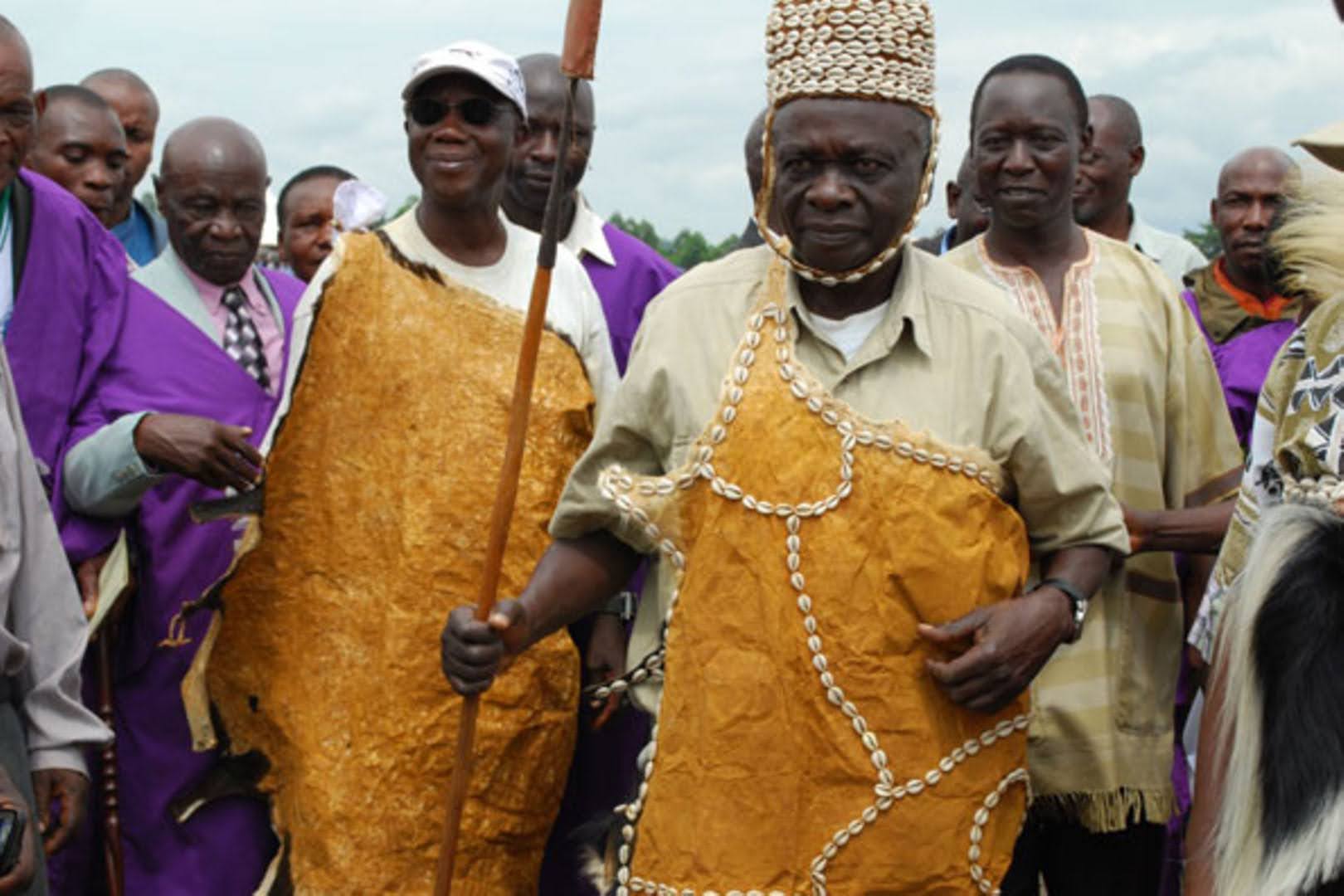
Court mediation delays leave Bamasaaba cultural leadership question unresolved
By Our Staff Reporter
Mbale, Uganda — The Bamasaaba community across the Bugisu sub-region is facing growing uncertainty following confirmation that the cultural leadership dispute between Inzu Ya Masaaba Cultural Institution and the Umukuuka wa Bugisu Cultural Institution has been referred to Alternative Dispute Resolution (ADR) under the Judiciary of Uganda.
A formal communication issued by the Mbale High Court revealed that a mediation meeting scheduled for 6 November 2025 was postponed due to circumstances beyond the court’s control. A new mediation date has not yet been announced.
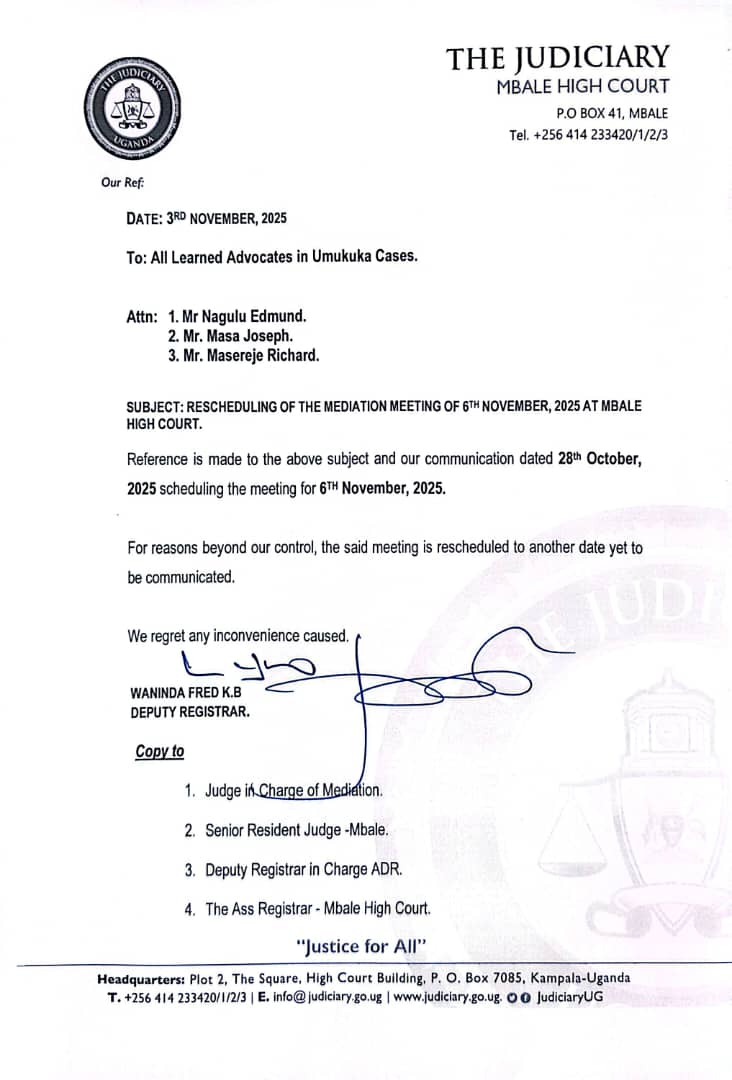
The meeting had been expected to bring together the disputing parties in an effort to resolve the long-running leadership disagreement affecting the Bamasaaba traditional institution.
Growing Community Anxiety
As the mediation process remains unresolved, uncertainty is spreading across the Bugisu region. Elders, cultural leaders, and community members are increasingly concerned about who will preside over the 2026 launch of the Imbalu circumcision season at the revered Mutoto Cultural Grounds.
The Imbalu Cultural Festival is one of the most significant cultural events in eastern Uganda, attracting thousands of initiates, elders, tourists, and cultural enthusiasts every even year.
Traditionally, the inauguration of Imbalu at Mutoto is presided over by the recognized cultural head of the Bamasaaba people — making the unresolved leadership question particularly sensitive.
Position of Umukuuka IV
The current cultural leader, Joram Khamboson Mayatsa, has publicly stated that the institution of the Umukuuka operates under a rotational custodianship system rooted in Bamasaaba tradition.
According to him, the cultural leadership commonly referred to as Bukuka is not permanently held by a single individual but is entrusted to specific clans that historically steward the institution.
He has indicated that the tenure of the Mwambu clan has run its course and that tradition dictates leadership should now revert to the Wanale clan.
Inzu Ya Masaaba Calls for Wider Consultation
Leaders aligned with Inzu Ya Masaaba Cultural Institution argue that broader consultation within the Bamasaaba community is necessary before any final determination on cultural leadership is made.
They maintain that the issue involves deep historical, cultural, and institutional questions that require lawful and inclusive processes. This position led them to pursue mediation through the Judiciary rather than continuing with prolonged litigation.
A Region Watching Closely
Across the Bugisu districts, discussions among elders, historians, and clan leaders are intensifying about what could happen if mediation delays continue.
Some cultural commentators warn that without a clear resolution, the ceremonial authority required to launch the 2026 Imbalu festival could become contested — an unprecedented situation for the ceremony traditionally held at Mutoto Cultural Grounds.
For now, the Bamasaaba community waits, hoping the mediation process will deliver clarity before the next Imbalu season begins.
Analysis: Understanding the Clan Rotation System in Bamasaaba Cultural Leadership
At the center of the ongoing cultural debate in Bugisu is a long-standing governance principle the clan rotation system that determines custodianship of the Bamasaaba cultural institution.
Historically, leadership of the Bamasaaba people symbolized by the title Umukuuka has been associated with three major clans believed to have foundational custodial roles in the institution.
The Three Principal Clans
Mwambu Clan
Wanale Clan
Mubuya Clan
Why the Rotation System Exists
Cultural historians explain that the rotational leadership system was designed to ensure balance, legitimacy, and unity among the Bamasaaba people.
Rather than concentrating authority permanently in one lineage, leadership responsibility rotates among the principal clans, symbolizing collective ownership of the cultural institution.
The system serves several important purposes:
Preventing cultural monopolization by a single clan
Maintaining legitimacy across the wider Bamasaaba community
Ensuring shared custodianship of sacred traditions such as the Imbalu ceremony
Where the Disagreement Arises
The current disagreement centers on the interpretation and implementation of the rotation system.
Supporters of Joram Khamboson Mayatsa argue that the established order indicates the Wanale clan should assume custodianship following the expiration of the Mwambu clan’s tenure.
However, leaders aligned with Inzu Ya Masaaba Cultural Institution insist that wider consultation with elders, clan leaders, and cultural authorities is necessary to determine the correct interpretation of tradition.
Why 2026 Is a Critical Year
The stakes are particularly high because the 2026 Imbalu Cultural Festival represents more than a ceremonial event it is a powerful symbol of Bamasaaba identity, unity, and heritage.
The leader who presides over the opening ceremony at Mutoto Cultural Grounds is widely recognized as the cultural figurehead of the Bamasaaba people.
This is why the mediation process under the Judiciary of Uganda has attracted intense public attention.
A Defining Moment for Bamasaaba Culture
For many observers, the current dispute represents more than a leadership contest.
It is a defining moment that may determine how tradition, law, and modern cultural institutions coexist in the governance of Bamasaaba heritage.
With 2026 approaching, elders across Bugisu agree on one point:
A peaceful and culturally legitimate resolution is essential to preserve unity among the Bamasaaba people.