 Kadodi Media House Your media place
By Our Staff Reporter
Mbale-Uganda-May 21, 2026.
Government Legal Opinion Declares Inzu Ya Masaaba Constitutional and Clarifies Leadership Tenure Excitement,
Celebration and renewed hope have swept across the Bamasaaba community following the release of the Attorney General’s legal opinion reaffirming the legitimacy of the and clarifying key constitutional matters regarding the leadership of The opinion, now widely circulating among clan leaders, elders and Bamasaaba communities at home and abroad, has been interpreted by many as a major restoration of constitutional order, cultural unity and institutional legitimacy within Inzu Ya Masaaba.
Celebrations reportedly broke out in different parts of Bugisu as supporters welcomed what they called “the return of the true constitutional cultural institution of Bamasaaba.”
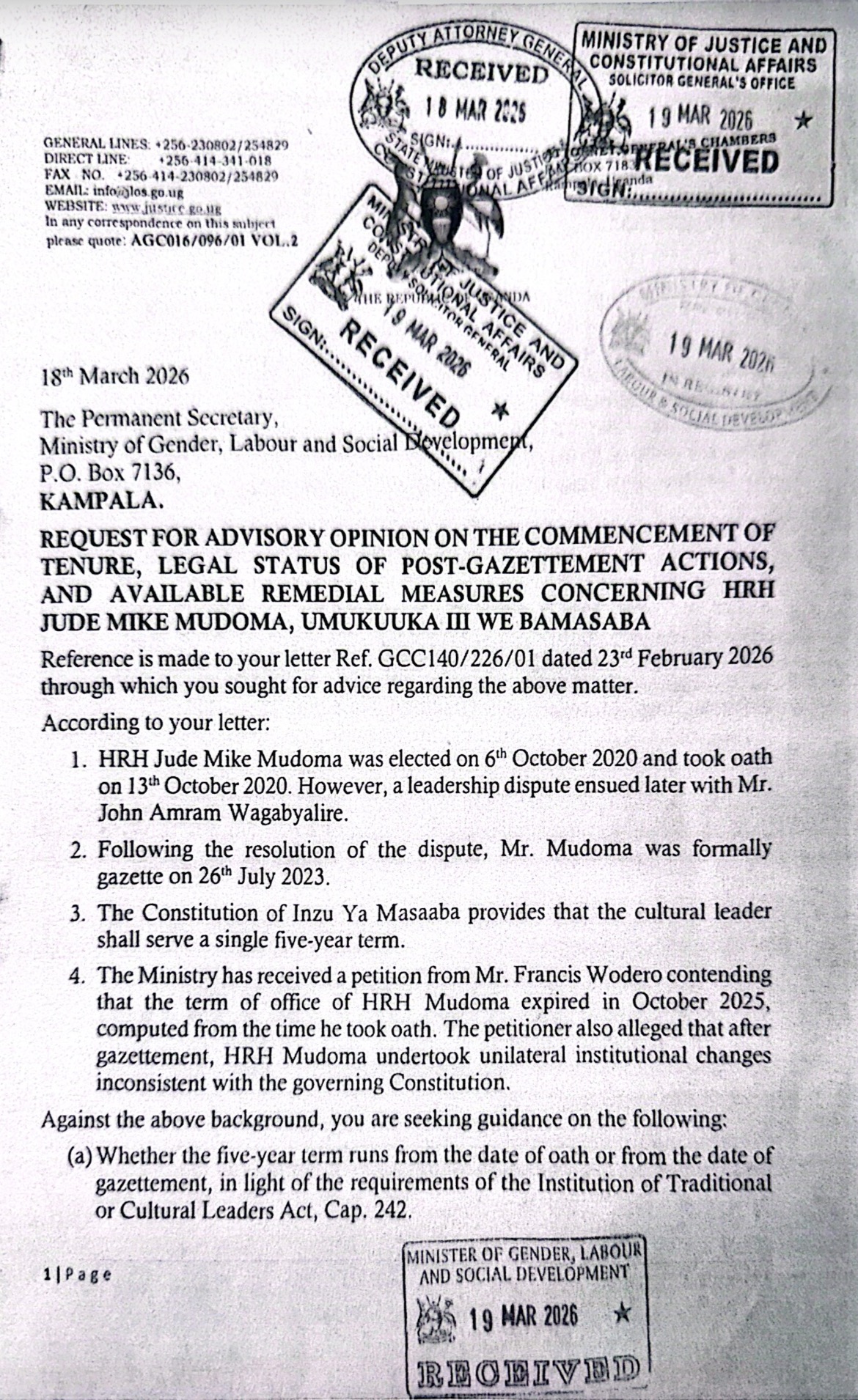
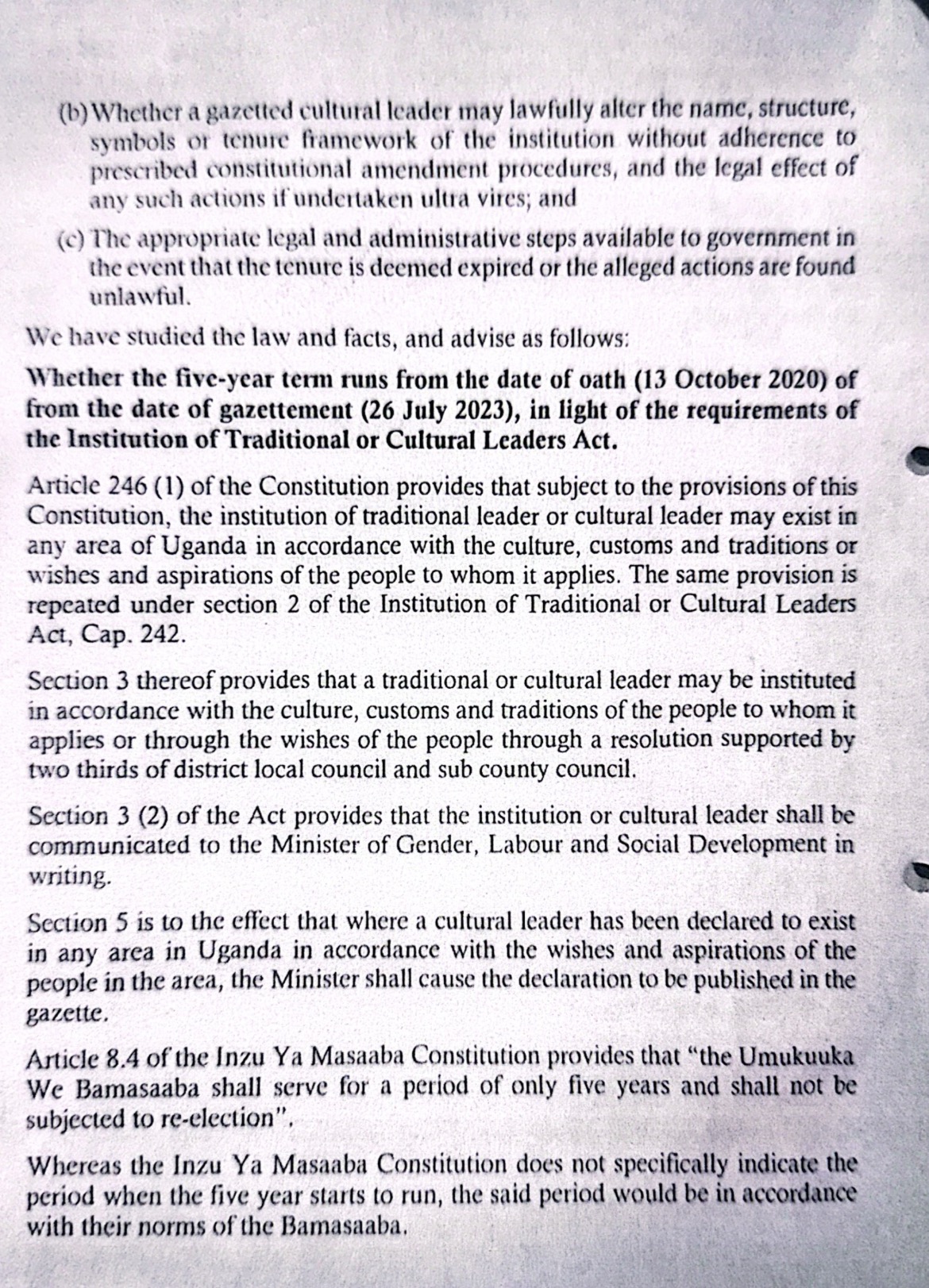
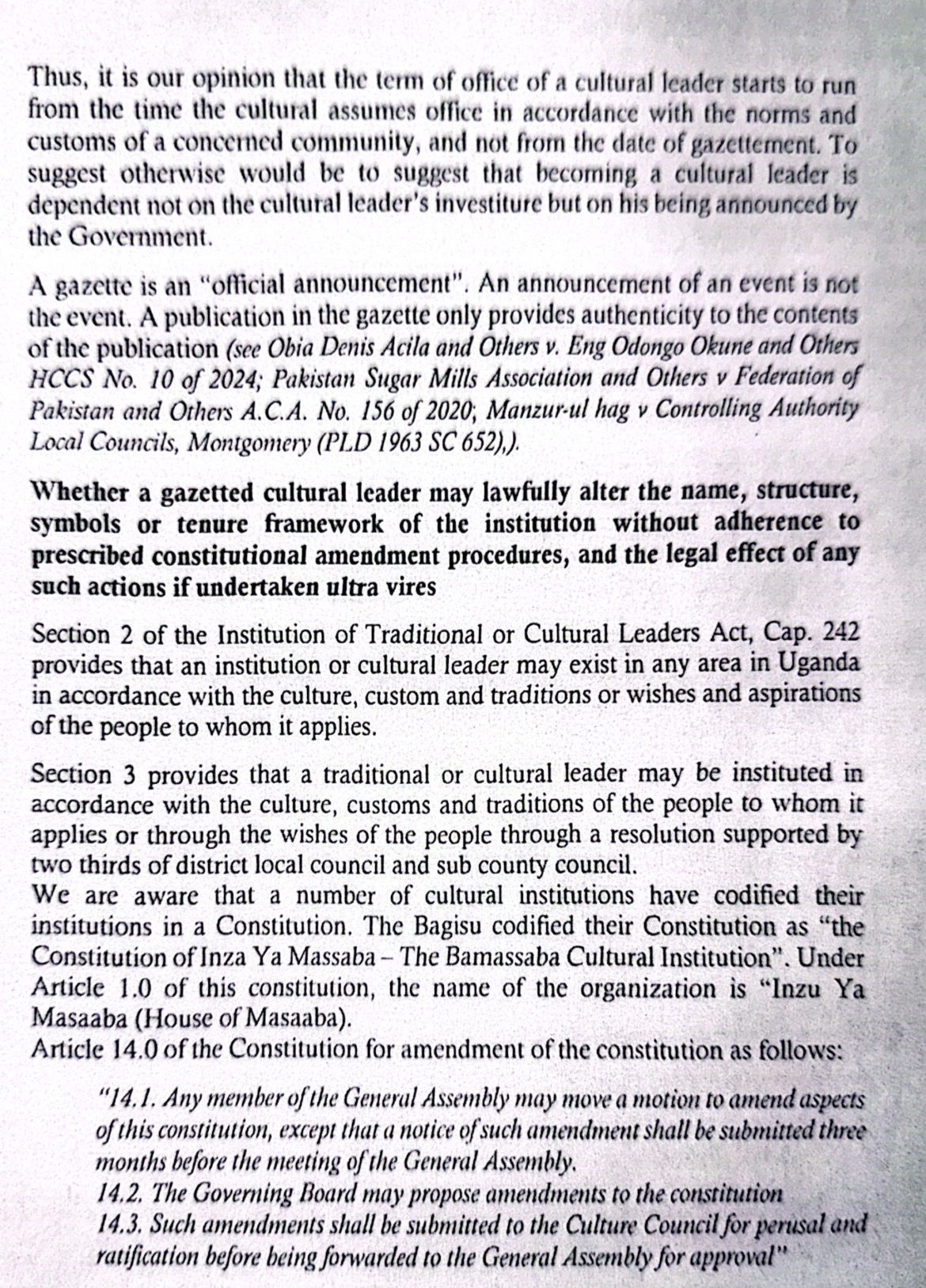
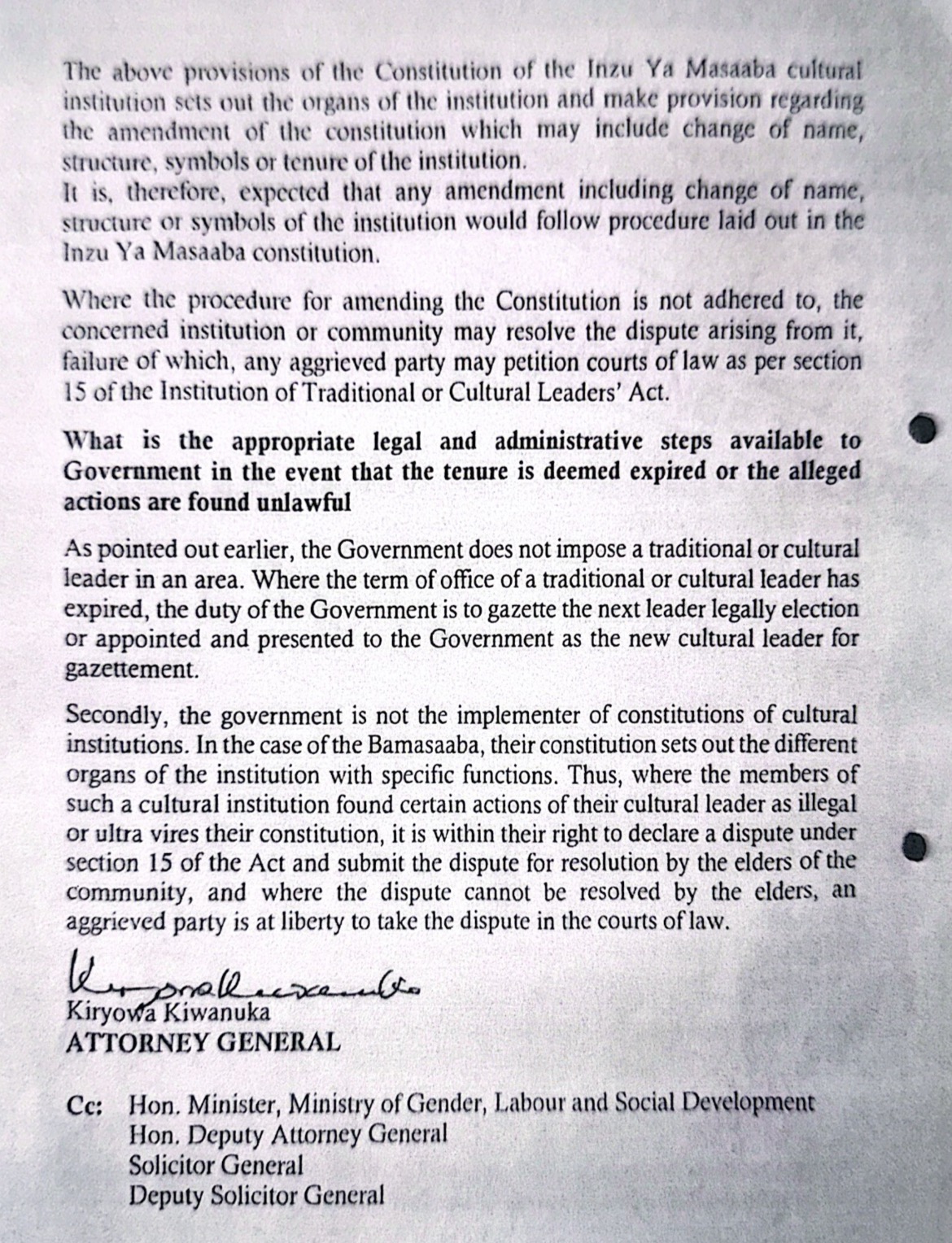
KEY POINTS FROM THE ATTORNEY GENERAL’S OPINION AND WHAT THEY MEAN
1. THE UMUKUUKA’S TERM STARTED ON THE DAY OF SWEARING-IN
The Attorney General clarified that the tenure of a cultural leader begins from the day he assumes office according to custom and tradition — not from the gazette date.
WHAT THIS MEANS:
The leadership term of Jude Mike Mudoma officially began on 13 October 2020.
The five-year constitutional term therefore expired in October 2025.
The 2023 gazette notice did not restart or extend the term.
2. GAZETTEMENT DOES NOT CREATE A CULTURAL LEADER
The opinion states that gazetting is only government recognition and publication.
WHAT THIS MEANS:
Government does not “make” a cultural leader.
A cultural leader derives legitimacy from the people, customs and constitution of the institution.
Bamasaaba traditions remain supreme in determining leadership legitimacy.
3. THE FIVE-YEAR TERM EXPIRED IN OCTOBER 2025
The Attorney General interpreted the Inzu Ya Masaaba Constitution to mean the tenure ended after five years from oath-taking.
WHAT THIS MEANS:
Any continuation beyond October 2025 without constitutional process may lack legal foundation.
Leadership transition should follow constitutional procedures.
4. THE CONSTITUTION ALLOWS ONLY ONE TERM
Article 8.4 of the Inzu Ya Masaaba Constitution permits only one five-year term for the Umukuuka.
WHAT THIS MEANS:
Re-election or extension beyond one term is not allowed.
The office is protected from permanent occupation.
Leadership rotation is part of the constitutional design.
5.NO LEADER CAN CHANGE THE INSTITUTION ALONE
The Attorney General warned that no individual can unilaterally alter:
the institution’s name,
symbols,
governance structure,
or tenure arrangements.
WHAT THIS MEANS:
Cultural institutions must operate under constitutional order.
Personal decisions cannot override institutional procedures.
The constitution remains the supreme guiding document.
6. CONSTITUTIONAL AMENDMENTS MUST FOLLOW PROCEDURE
The opinion emphasized that amendments must pass through:
the Governing Board,
the Culture Council,
and the General Assembly.
WHAT THIS MEANS:
Any changes made outside these organs may be invalid.
Collective leadership and consultation are mandatory.
7. UNILATERAL ACTIONS MAY BE INVALID
The Attorney General used the legal principle of “ultra vires,” meaning actions done outside lawful authority.
WHAT THIS MEANS:
Any unconstitutional actions can be challenged and nullified.
Leaders must act strictly within the powers granted by the constitution.
8. GOVERNMENT DOES NOT IMPOSE CULTURAL LEADERS
The opinion reaffirmed that communities choose their own cultural leaders.
WHAT THIS MEANS:
Bamasaaba remain custodians of their cultural leadership.
Government’s role is limited to official recognition after lawful community processes.
9. CULTURAL DISPUTES SHOULD FIRST BE HANDLED INTERNALLY
The Attorney General advised that disputes should first go through elders and internal mechanisms under Section 15 of the law.
WHAT THIS MEANS:
Dialogue and customary reconciliation are encouraged first.
Courts become the last option after internal mechanisms fail.
10. COURT ACTION IS POSSIBLE IF INTERNAL TALKS FAIL
Aggrieved parties may seek legal remedies if internal dispute resolution does not succeed.
WHAT THIS MEANS:
Constitutional accountability remains enforceable in court.
No individual is above the institution’s constitution.
11. AFTER A TERM EXPIRES, A NEW LEADER SHOULD BE CHOSEN
The opinion indicates that after expiry of tenure, the community should legally select another leader before government gazettes the new office bearer.
WHAT THIS MEANS:
Succession must follow lawful and constitutional procedures.
The future leadership of Bamasaaba should emerge through recognized institutional processes.
12. THE ATTORNEY GENERAL RECOGNIZED INZU YA MASAABA
Throughout the opinion, the Attorney General consistently referred to “Inzu Ya Masaaba” and its constitution.
WHAT THIS MEANS:
The opinion effectively reaffirmed the constitutional identity of the institution.
Supporters interpret this as restoration of the legitimate Bamasaaba cultural institution.
BAMASAABA REACT
Community members, clan elders, youth leaders and cultural supporters described the opinion as:
“a victory for constitutionalism,”
“a restoration of cultural dignity,”
and “a triumph of Bamasaaba unity.”
Observers say the legal opinion could mark a turning point in resolving longstanding leadership disputes and restoring stability within the Bamasaaba cultural institution.
As celebrations continue across the region, many Bamasaaba are now calling for peaceful transition, reconciliation and renewed unity under the constitutional framework of Inzu Ya Masaaba.