 Kadodi Media House Your media place

By Our Staff Reporter
Kyenjojo, Uganda| August 18, 2026
The State House Comptroller, Ms. Jane Barekye, has warned graduates of the Presidential Industrial Skilling Hubs against misusing Government start-up loans, saying President Yoweri Kaguta Museveni is prepared to increase funding to graduates’ SACCOs if the existing revolving funds are properly managed.
Barekye said beneficiaries must demonstrate financial discipline by investing the loans in productive businesses instead of using the money for non-productive activities such as alcohol consumption and bride price payments.
She made the remarks on Tuesday, August 18, 2026, during a stakeholders’ engagement at the Tooro Zonal Presidential Industrial Skilling Hub in Kyenjojo District.
“The President is going to add more money to these SACCOs. What we need from you is financial discipline. First invest the money in the rightful projects,” Barekye said.
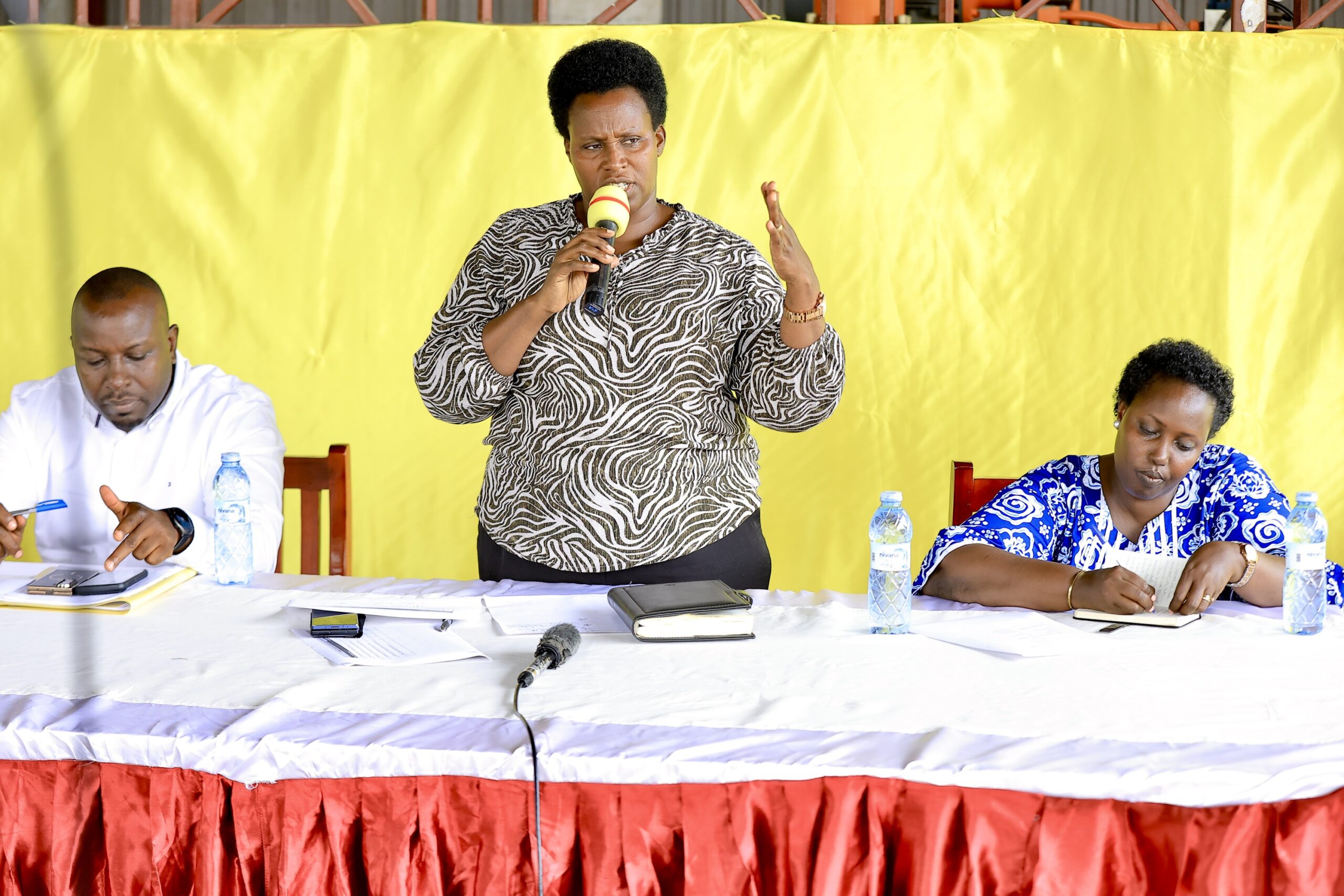
She explained that beneficiaries should only use profits generated from their businesses for personal needs such as bride price, rather than spending the original loan capital.
“Please don’t play with the President’s money,” she cautioned.
State House Reviews SACCO Performance
The stakeholders’ meeting brought together State House officials, political and technical leaders, SACCO executives and graduates to review the performance of the skilling programme and its revolving fund.
The Tooro Zonal Presidential Industrial Skilling Hub serves beneficiaries from Kyenjojo, Kyegegwa, Kamwenge, Fort Portal City, Bunyangabu and Kabarole.
Barekye said the Shs50 million provided to each district graduates’ SACCO was introduced as a pilot intervention to help graduates turn the skills acquired at the Presidential Industrial Skilling Hubs into sustainable income-generating enterprises.
She said State House was working with local leaders to assess how the funds are performing, identify challenges and ensure that the programme achieves its intended objectives.
“This is a project we lead together with you. We want to hear from you about what we are doing and how we are performing. We are here to review all that with you,” she said.
Barekye urged local leaders to closely monitor district SACCOs and ensure that funds reach the intended beneficiaries and are invested in the businesses for which they were borrowed.
Finance Manager Deployed to Strengthen Accountability
The State House Comptroller disclosed that a finance manager had been deployed to strengthen supervision of SACCO operations and track how beneficiaries are using the revolving funds.
The newly deployed finance manager, Mr. Ronald Aroho, pledged to work with SACCO leaders, district commercial officers and other stakeholders to improve accountability and ensure that the funds generate tangible results.
Barekye commended district commercial officers for their role in guiding and monitoring SACCOs and directed Aroho to work closely with them instead of creating a parallel monitoring system.
She also encouraged district leaders to make unannounced visits to the skilling hub to assess training, management and the overall implementation of the programme.
“This is your project; don’t let it die. The President has invested a lot in it,” she said.
Local Governments Asked to Support Graduates
Barekye challenged local governments to deliberately create opportunities for skilling hub graduates by awarding them contracts and tenders for products they are trained to produce.
She cited school desks, beds and other locally produced items as areas where graduates could secure business opportunities.
Where contracts are too large for individual graduates, she encouraged contractors to employ young people trained at the Presidential Industrial Skilling Hubs during project implementation.
The Comptroller also encouraged communities to utilise the hub’s four-acre model farm to acquire practical knowledge in commercial agriculture, including fish farming and other income-generating enterprises.
SACCO Leaders Raise Loan Access Challenges
The meeting also reviewed the performance of graduate SACCOs, with leaders highlighting challenges affecting access to the revolving funds.
Mr. Mulungi Kenneth, Chairperson of the Kabarole District Hub SACCO, said 36 graduates had so far accessed the revolving fund.
However, he said the lack of National Identification Cards among some beneficiaries was limiting access to the loans.
The Kamwenge District Hub SACCO Chairperson, Mr. Akampulira Everest, said 13 beneficiaries had received loans and invested them in their intended projects.
He commended President Museveni for providing the start-up capital but said some youth continued to face challenges with registration requirements, including access to Wendi services.
SACCO leaders appealed to State House to consider reviewing some loan access requirements so that graduates without National IDs are not entirely excluded where their identity and graduation status can be verified.
They said easing the challenges would prevent funds from remaining idle in SACCO accounts while trained graduates struggle to access capital.
Graduates Testify to Impact of Programme
Several beneficiaries told the meeting that combining vocational training with access to start-up capital had transformed their livelihoods.
Ms. Kabasiita Janet, a tailoring graduate from Kitagwenda, said she previously had limited prospects of finding employment because she lacked formal academic qualifications.
After completing her training, she accessed a Shs560,000 SACCO loan, which enabled her to start earning from her tailoring skills.
However, she appealed for an increase in the loan amount, saying the Shs560,000 was not enough to purchase a sewing machine, pay rent and acquire sufficient materials to establish a fully equipped tailoring business.
Despite the challenges, Kabasiita said the programme had restored her confidence and improved her standing in the community. She added that her nationally recognised certificate had also opened new opportunities, including leadership responsibilities in her church.
Mr. Abenitwe Jordan, a carpentry graduate from Kitagwenda, said he received Shs1.35 million and used the money to establish his own workshop.
He said he produces beds at a cost of about Shs180,000 and sells them between Shs250,000 and Shs350,000 depending on the design.
Abenitwe has also diversified into poultry and piggery.
“Since my childhood, I had never put on a coat and tie, but because of this programme, I can now wear this attire,” he said, describing the programme as an opportunity that gave him both skills and capital to improve his life.
Ms. Atuyambe Hannah from Katunguru in Kyenjojo also shared her experience, saying the programme provided her with an alternative to seeking employment abroad.
After completing Senior Four, Atuyambe said her father had encouraged her to travel abroad for domestic work, a proposal she was uncomfortable with.
She later learnt about the Tooro Zonal Presidential Industrial Skilling Hub through radio, enrolled in 2023 and completed a tailoring course in July 2024.
She said the hub’s mindset-change training complemented her vocational skills and helped shape her entrepreneurial outlook.
After graduation, she received a Shs560,000 SACCO loan and started a tailoring business before expanding into the sale of household items.
Atuyambe said she currently earns between Shs250,000 and Shs300,000 per month, supports her family and saves part of her income.
Leaders Commend Skilling Programme
Local leaders commended the Presidential Industrial Skilling Hub programme, particularly its focus on mindset change and practical skills.
Bunyangabu Resident District Commissioner, Mr. Nicholas Kamukama, said the mindset-change component had contributed to producing disciplined and responsible graduates.
He suggested that similar engagements be extended to local leaders, saying some Government programmes can be undermined when leaders politicise them instead of mobilising communities to benefit.
Kyenjojo Resident District Commissioner, Ms. Ayesiga Julian Sarah, welcomed the establishment of the four-acre model farm at the hub but urged State House to consider introducing irrigation to maintain productivity during dry seasons.
Kabarole Deputy RDC, Ms. Benuza Jane Atenyi, said the hub was strengthening household incomes by equipping both women and men with practical and employable skills.
Government Plans to Strengthen Graduate SACCOs
The stakeholders’ meeting formed part of State House’s ongoing assessment of the Presidential Industrial Skilling Hubs, graduate SACCOs and model farms across the country.
The engagements are also intended to gather feedback from beneficiaries and local leaders on the performance of the programme and challenges affecting its implementation.
President Museveni introduced the revolving fund after graduates raised concerns that, despite acquiring vocational skills, many lacked the capital required to establish businesses.
The Government subsequently injected Shs50 million into each district graduates’ SACCO, from which beneficiaries access loans to establish income-generating enterprises.
The funds operate on a revolving basis, with beneficiaries expected to repay their loans so that other graduates can also access the capital.
The State House Education and Skilling leadership has now warned beneficiaries that responsible management of the existing funds will be critical if graduates are to benefit from additional SACCO funding in the future.