 Kadodi Media House Your media place
By Our Staff Reporter
ENTEBBE, UGANDA — October 14, 2026
President Yoweri Kaguta Museveni has called on the European Union (EU) to increase investment in Africa’s industrialisation by supporting local processing of raw materials, creating jobs and promoting mutually beneficial trade between the two regions.
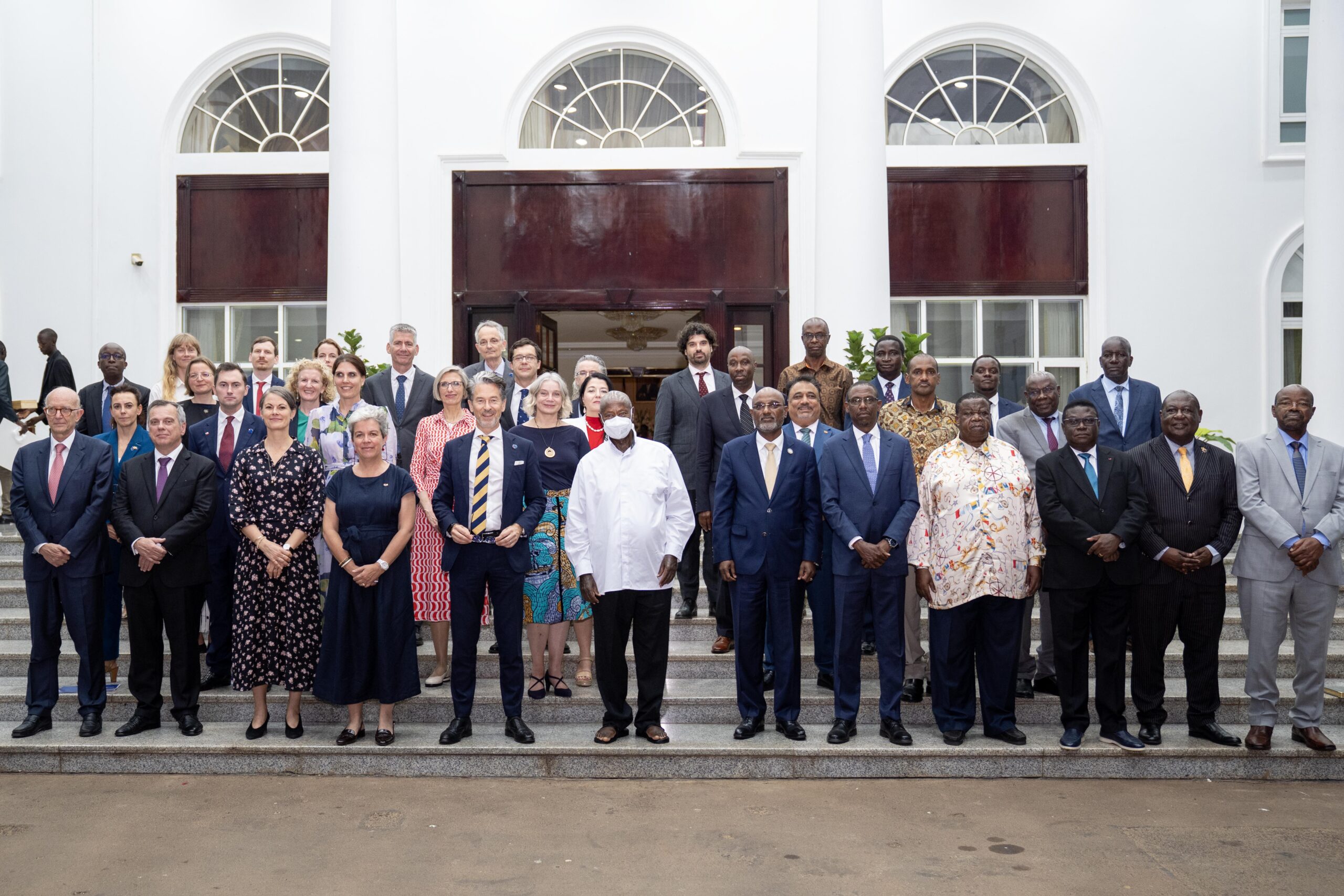
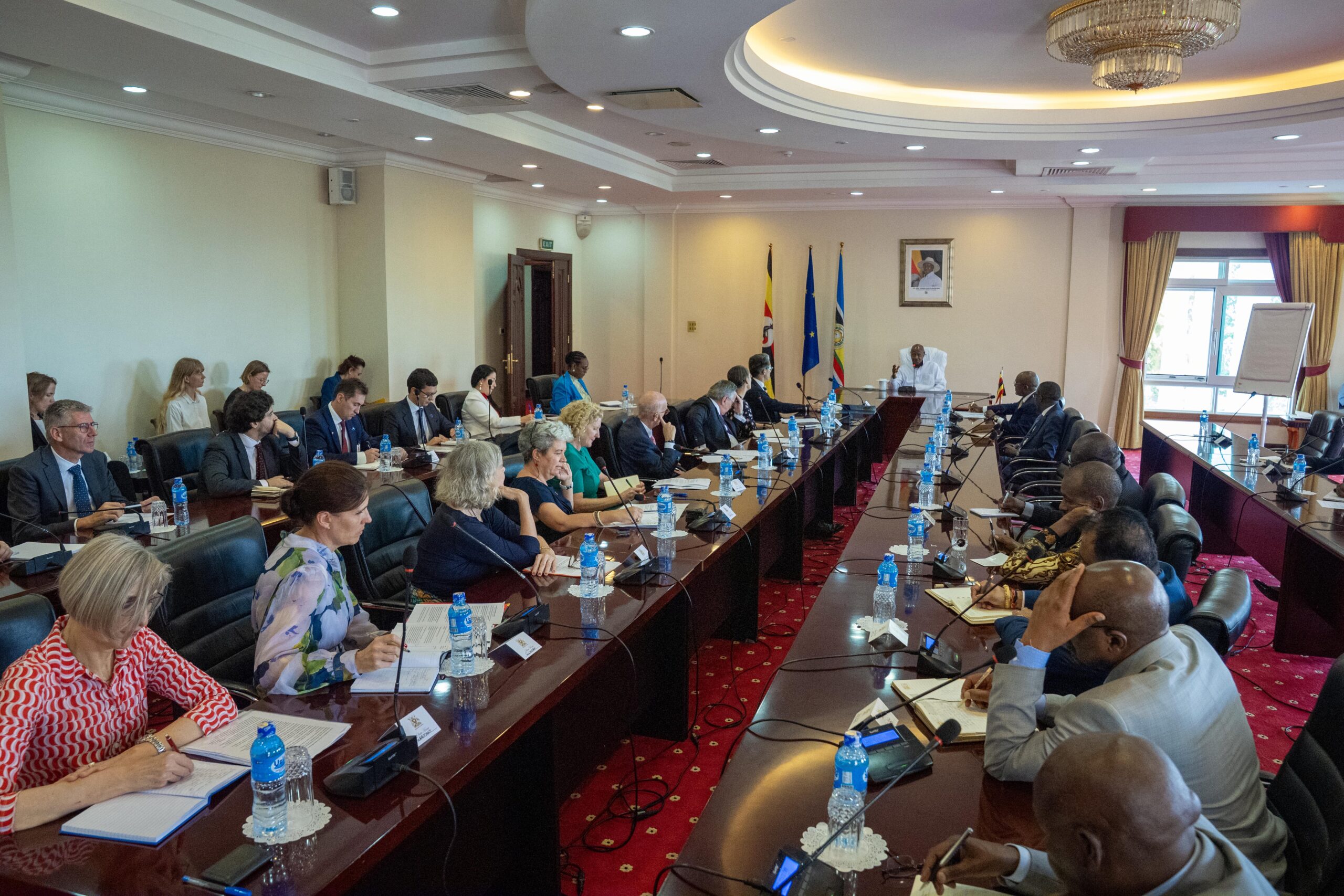
The President made the remarks on Wednesday, October 14, 2026, while hosting the first Uganda–European Union Partnership Dialogue at State House, Entebbe, where he co-chaired discussions with the EU delegation led by Ambassador Jan Sadek.
The meeting, held as Uganda and the EU mark 50 years of cooperation, focused on trade, investment, environmental protection, energy, security and development.
Museveni said Africa needed to move away from exporting unprocessed raw materials and instead invest in manufacturing and value addition to ensure that more income and employment opportunities remain within the continent.
He cited coffee as an example, noting that a kilogramme of unprocessed coffee beans could fetch about $2, compared with approximately $40 when processed.
The President argued that African countries were losing significant economic opportunities by exporting raw materials while other countries earned more from processing and selling finished products.
He urged European companies to partner with African businesses to establish processing industries and support the continent’s economic transformation.
Museveni also said Uganda’s exports to Europe, estimated at €1.8 billion, could increase significantly if the country expanded the production and export of higher-value goods.
He explained that increased earnings from processed exports would enable Uganda to purchase more European products, including medical equipment and industrial machinery, benefiting businesses on both sides.
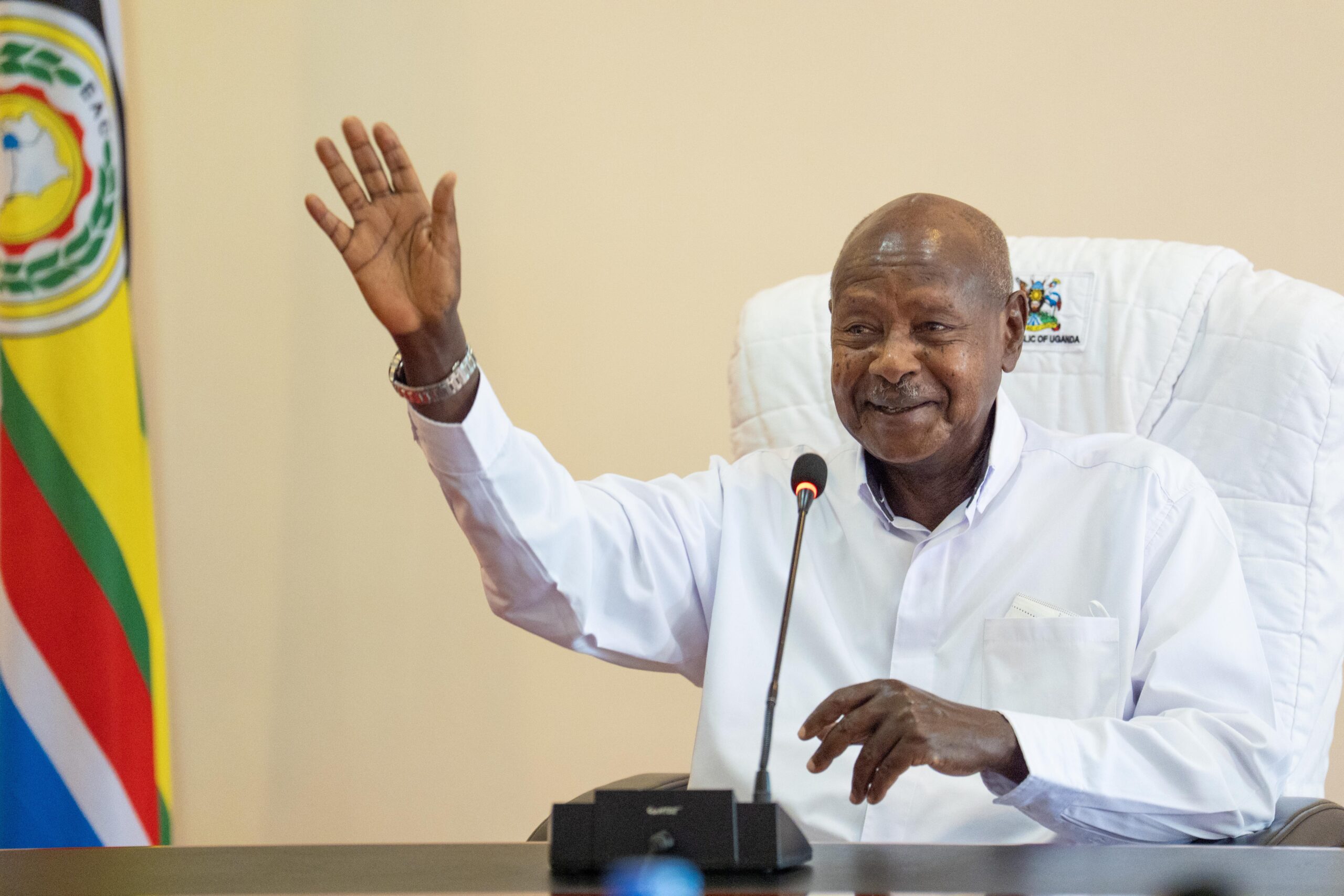
The President asked the EU to support Uganda’s Parish Development Model (PDM), which aims to move households from subsistence production into the money economy and help millions of families escape poverty.
He also called for investment in large-scale irrigation to reduce dependence on rainfall and protect agricultural production against changing weather patterns.
On environmental conservation, Museveni urged European partners to support the protection of wetlands and forests while promoting sustainable alternatives such as fish farming, irrigation and improved water management.
He further called for investment in affordable electricity to support manufacturing and industrial growth, saying Uganda needed reliable power at competitive rates to strengthen its production capacity.
Museveni also proposed that the European Union consider becoming an associate member of the African Union to strengthen cooperation between the two regions.
However, he emphasised that Uganda welcomed international partnerships while expecting respect for its sovereignty and domestic decision-making.
EU Ambassador to Uganda, H.E. Jan Sadek, reaffirmed the European Union’s commitment to strengthening relations with Uganda, noting that European support to the country over the past 50 years was estimated at approximately €20 billion.
Sadek said the partnership provided opportunities for further cooperation in trade, investment, private-sector development and industrial processing.
He highlighted coffee, chocolate and other value-added agricultural products as areas with potential to attract European investment and access international markets.
The ambassador also announced €50 million in new support for conservation and tourism, while highlighting ongoing cooperation in mineral development and processing.
He commended Uganda’s contribution to regional peace and security, particularly its military involvement in Somalia, as well as the country’s response to public health emergencies.
The dialogue recognised the European Union as Uganda’s largest trading partner outside Africa, with bilateral trade estimated at €2.4 billion annually and Uganda recording a trade surplus of approximately €1 billion, according to the meeting’s account.
Both sides agreed to establish structured discussions aimed at improving the business environment and securing Uganda’s continued access to the European market, including through a possible Economic Partnership Agreement.
They also agreed to establish a dedicated security dialogue and continue cooperation in climate action, renewable energy, refugee support and regional stability.
The EU delegation highlighted Team Europe’s contribution of more than €520 million towards refugee-related interventions in Uganda.
The two sides further discussed regional and international security developments and reaffirmed their commitment to multilateral cooperation.
The Uganda–EU Partnership Dialogue will be held annually to review progress, address shared challenges and identify new opportunities for cooperation.
The meeting was attended by several Ugandan government officials, including the Minister of Foreign Affairs, Hon. Adonia Ayebare; Minister of Trade, Industry and Cooperatives, Hon. Sanjay Tanna; Attorney General Dr. Sam Mayanja; Minister of Agriculture, Hon. Frank Tumwebaze; and Minister of State for Finance, Planning and Economic Development, Hon. Amos Lugoloobi, among other officials.
The discussions underscored the importance of strengthening Uganda–EU relations through industrialisation, value addition, investment and trade that delivers greater economic benefits to both partners.