 Kadodi Media House Your media place
 New structure puts agriculture, value addition and industrial agro-processing at the centre of Uganda’s wealth-creation agenda
By Our Staff Reporter
KAMPALA, UGANDA | SEPTEMBER 10 2026
Operation Wealth Creation (OWC) has announced a major restructuring of its directorates and leadership as part of efforts to align its operations with a new institutional establishment and strengthen service delivery across Uganda.
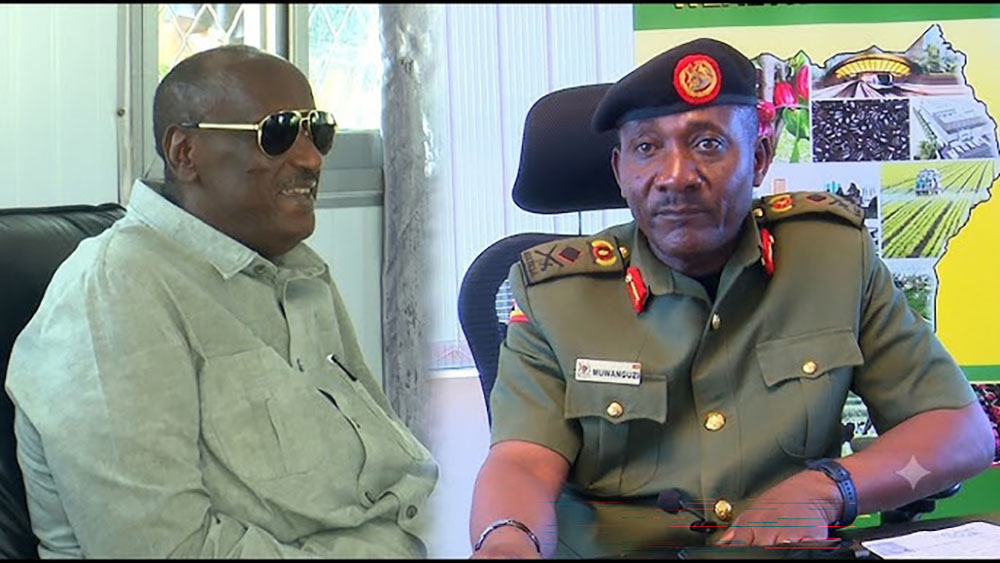
The transition was announced at OWC Headquarters in Kamwokya, Kampala, by Deputy Chief Coordinator Brig. Gen. Godfrey Muwanguzi, on behalf of the Chief Coordinator, Gen. (Rtd) Caleb Akandwanaho, popularly known as Gen. Salim Saleh.
The restructuring introduces a more consolidated institutional framework intended to improve coordination, accountability and implementation of OWC’s national wealth-creation programmes.
VALUE ADDITION AND MANUFACTURING ELEVATED
Among the most significant changes is the elevation of Value Addition and Manufacturing into a fully-fledged directorate, with increased emphasis on industrial agro-processing.
The move signals OWC’s growing focus on ensuring that Uganda does not only produce agricultural commodities but also develops the capacity to process, package and add value to them before they reach domestic, regional and international markets.
For agricultural communities, this approach could strengthen opportunities in sectors such as coffee, dairy, fruits, cereals and other agricultural value chains by connecting primary production with processing, manufacturing and markets.
AGRICULTURAL FUNCTIONS CONSOLIDATED
OWC has also consolidated various agricultural sub-units into a unified Directorate of Agriculture, creating a more coordinated structure for agricultural interventions.
Under the new leadership arrangement, Maj. Gen. (Rtd) John Mateeka has been appointed Director of Agriculture.
The consolidated directorate is expected to provide greater coordination of agricultural programmes and strengthen OWC’s contribution to household income generation, commercial agriculture and national economic transformation.
NEW LEADERSHIP ACROSS KEY DIRECTORATES
The institutional changes have also brought a number of leadership appointments across OWC.
Among the notable appointments is Maj. Gen. (Rtd) David Wakalo, who takes responsibility for the Inspectorate, Research and Analysis Directorate, while Hon. Kabakumba Masiko has been assigned to the Wealth Creation and Social Action Funds Directorate.
Other appointments cover key areas including value addition and manufacturing, political affairs, infrastructure, operations, social services, policy, science and ICT, private-sector development and the creative sector.
OWC has also incorporated principal advisory roles, including personalities such as AIGP (Rtd) Moses Balimwoyo and Hon. Henry Banyenzaki, as part of the broader institutional arrangement.
WHAT THE RESTRUCTURING COULD MEAN FOR FARMERS
For agricultural regions such as Bugisu and the wider Mt. Elgon sub-region, the increased emphasis on agriculture, value addition and industrial agro-processing could present important opportunities.
Bugisu remains one of Uganda’s major Arabica coffee-producing areas, alongside its production of bananas, dairy products, horticultural crops and other agricultural commodities.
Greater coordination between production, value addition, private-sector development and agro-processing could help communities move beyond the sale of raw agricultural produce towards processing, branding and higher-value markets.
The development is particularly significant at a time when cultural institutions, farmer organisations, cooperatives, private enterprises and community development organisations are increasingly exploring household wealth-creation models built around sustainable agriculture and value addition.
FROM PRODUCTION TO WEALTH CREATION
The new OWC establishment appears to reinforce a broader shift from concentrating primarily on agricultural production towards building integrated economic value chains.
If effectively implemented, stronger linkages between farmers, processors, manufacturers, financial institutions, markets and government programmes could help increase household incomes, create employment opportunities for young people and strengthen Uganda’s agro-industrial economy.
For coffee-growing communities in the Mt. Elgon region, the value-addition agenda is particularly important. The region has considerable potential to increase the economic benefits derived from Arabica coffee through improved processing, roasting, packaging, branding and domestic consumption alongside traditional export markets.
As the new OWC leadership settles into its respective directorates, attention will now turn to how the restructured institution translates its new establishment into measurable benefits at household and community level.