 Kadodi Media House Your media place
By Our Staff Reporter
MBALE, UGANDA — Thursday, September 3, 2026.
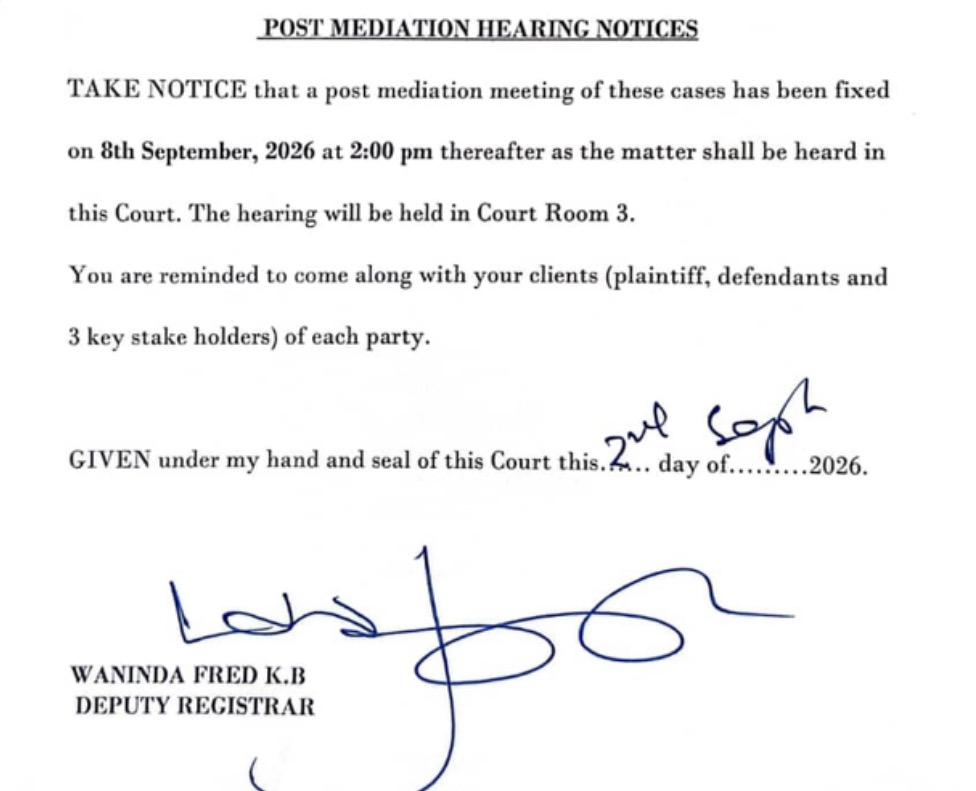
The High Court in Mbale has fixed a post-mediation meeting for a batch of cases connected to the Umukuuka leadership dispute for Tuesday, 8 September 2026, at 2:00 p.m., another step forward in the long-running legal saga surrounding the leadership of Inzu Ya Masaba.
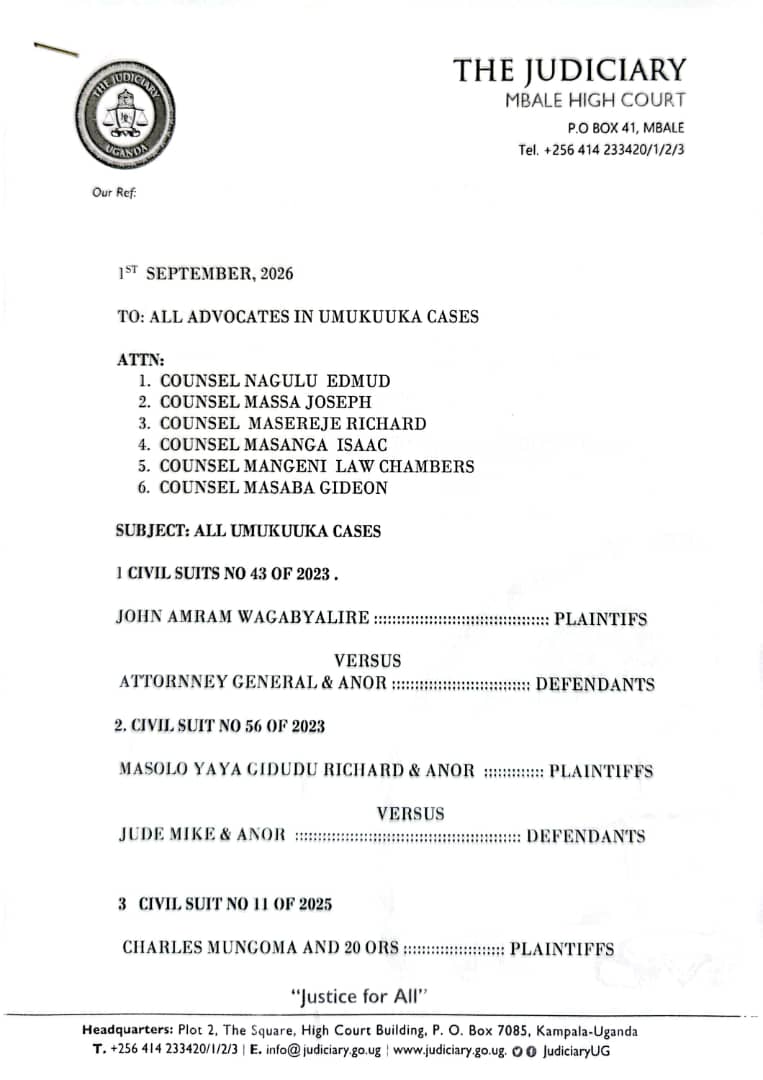
According to a notice issued by the Judiciary at Mbale High Court, the meeting will be held in Court Room 3. Advocates representing the respective parties have been directed to attend together with their clients and three key stakeholders from each side.
COURT BRINGS RELATED CASES BACK FOR POST-MEDIATION PROCESS
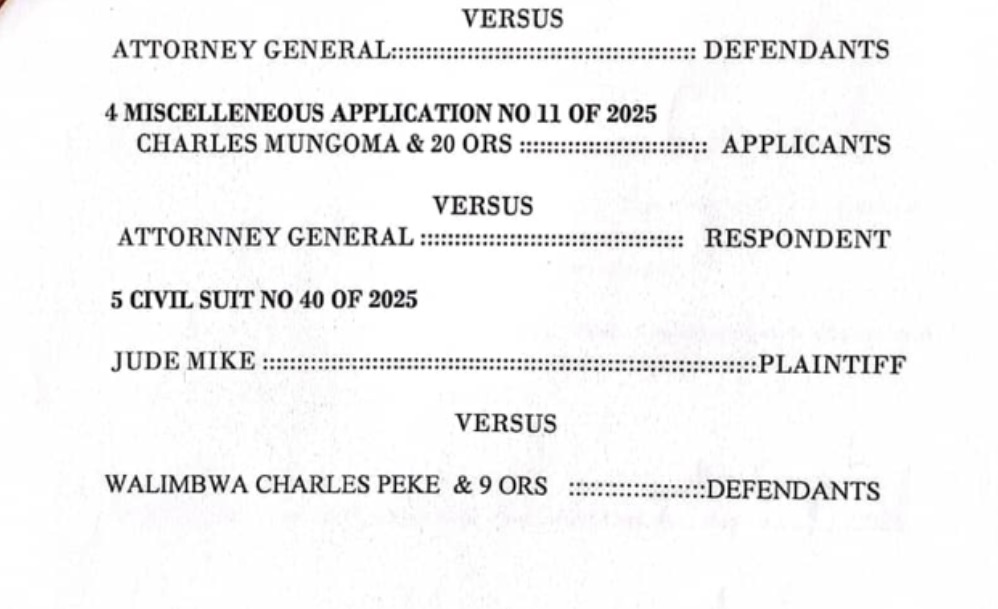
The communication, dated 1 September 2026, is addressed to advocates involved in the Umukuuka-related cases and lists several matters before the court, including Civil Suit No. 43 of 2023, Civil Suit No. 56 of 2023, Civil Suit No. 11 of 2025, Miscellaneous Application No. 11 of 2025, and Civil Suit No. 40 of 2025.
Among the parties named in the listed proceedings are John Amram Wagabyalire, Masolo Yaya Cidudu Richard, Charles Mungoma and 20 others, Jude Mike, Walimbwa Charles Peke and others, as well as the Attorney General.
The post-mediation notice, signed by Deputy Registrar Waninda Fred K.B., confirms that the cases have been fixed for the September 8 meeting, after which the matters will proceed before the court.
BUILDING ON A LANDMARK SETTLEMENT
Tuesday’s meeting follows what was widely regarded as a breakthrough moment for the Bamasaaba cultural institution. In July 2026, rival factions in the Inzu Ya Masaba leadership dispute reached a court-mediated settlement after two days of intensive mediation at the High Court in Mbale, ending years of litigation over the leadership of Umukuka III Jude Mike Mudoma.
The mediation was led by Deputy Chief Justice Emeritus Richard Buteera, alongside Solicitor General Emeritus Francis Atoke, Uganda Law Society President Emeritus Francis Gimara, and Prof. Andrew Khaukha, Head of Alternative Dispute Resolution and Director of the Judicial Training Institute. Opening the talks, Justice Buteera reminded the parties that the panel was sitting as mediators rather than as a court, and urged respect, restraint and flexibility throughout the process.
The eventual consent judgment confirmed Mudoma as the recognised cultural leader for his current term, running to 25 July 2028, and restored the traditional five-year rotational leadership system among the Wanale, Mubuya and Mwambu clans, with leadership set to pass to the Wanale clan once that term expires. Prof. Khaukha described the agreement as binding on all parties once endorsed by the court.
That settlement, however, has not been free of friction. Weeks after the consent judgment, disagreements emerged over its implementation — most visibly around the Imbalu 2026 inauguration, where district leaders and the Umukuuka’s camp offered competing interpretations of who holds authority over cultural functions during the transition. It is against this backdrop that the outstanding suits — including matters not fully absorbed into the original consent judgment return to court for the September 8 post-mediation session.
KEY PROSPECTS
Consolidation of outstanding matters: With five separate suits and applications listed together, the session offers the court an opportunity to align related cases and streamline how they proceed, rather than handling each in isolation.
Clarifying implementation gaps: Given the disputes that have already surfaced over enforcing the July consent judgment, advocates may use the meeting to seek clearer directions on how cultural authority and institutional oversight are to be exercised during the transition period.
Stakeholder buy-in: The requirement for each party to bring three key stakeholders, in addition to counsel and clients, suggests the court is keen to ensure that any outcome carries broader legitimacy beyond the litigants named on the case file.
A test of durability for the ADR process: Having already delivered one of the Judiciary’s most notable alternative dispute resolution successes in recent years, the court will be looking to demonstrate that mediation can also hold up during implementation, not just at the point of settlement.
Community and political attention: Given the cultural weight of the Umukuuka institution within the Bamasaaba community, the hearing is likely to draw close interest from cultural leaders, Bugisu political figures, and residents watching to see whether the process reinforces the peace secured in July.
The proceedings should not be read in advance as a determination in favour of any party. A post-mediation hearing is a procedural stage in the court process, and the direction of the respective cases will depend on what the court records, directs, or subsequently determines.
With advocates, litigants and selected stakeholders expected in Court Room 3, attention now turns to Mbale High Court on Tuesday, 8 September 2026, for what could be a significant step in consolidating the peace reached earlier this year and addressing the Umukuuka-related disputes that remain outstanding.