 Kadodi Media House Your media place
By Our Staff Reporter
| April 13, 2026 | Culture & Law
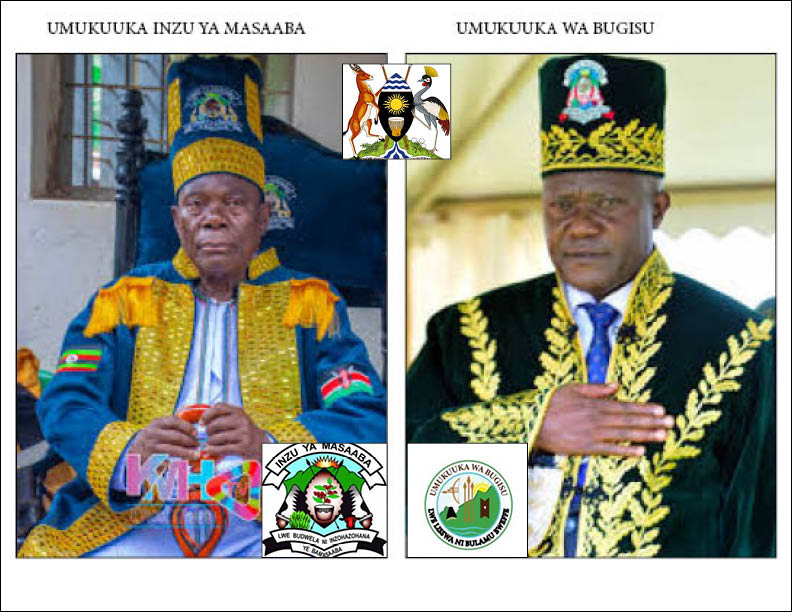
Mbale, Uganda — A sharp and deeply consequential dispute has emerged within the Bamasaaba cultural leadership, pitting supporters of Jude Mike Mudoma against those aligned with Mayatsa Joram Khamboson. The disagreement, once confined to internal deliberations, has now evolved into a broader legal and cultural contest over legitimacy, constitutional authority, and the future of Bamasaaba identity.
Constitutional Legitimacy at the Center of Dispute
At the heart of the conflict lies the status of the Inzu Ya Masaaba (IYM) constitution—the foundational legal and cultural document underpinning the institution. Critics of Mudoma argue that his reported declaration rendering the constitution obsolete raises serious legal concerns.
Under the Constitution of Uganda 1995, cultural institutions derive legitimacy from the will and customs of their people, not unilateral executive actions. Legal scholars note that any attempt by a cultural leader to invalidate the very constitution under which he assumed office could be interpreted as acting ultra vires (beyond lawful authority), potentially rendering such actions void ab initio.
Supporters of Khamboson maintain that the IYM constitution remains binding and that its amendment or dissolution must follow prescribed collective procedures involving clan structures and cultural organs—not individual decree.
Rebranding Controversy Raises Legal and Cultural Questions
The reported transition from “Inzu Ya Masaaba” to a rebranded “Bugisu Cultural Institution” has further intensified scrutiny. Analysts emphasize that neither statutory law nor customary legal frameworks grant a cultural leader unilateral powers to redefine the identity, symbols, or territorial scope of a cultural institution.
The term “Inzu Ya Masaaba,” meaning “House of Masaaba,” carries transboundary cultural significance, encompassing Bamasaaba communities in both Uganda and Kenya. Legal observers warn that narrowing this identity to “Bugisu”—a colonial-era administrative construct—may undermine broader ethnic cohesion and raise questions about cultural exclusion.
Language Policy Dispute Reaches National Institutions
Another contentious issue involves the submission of a revised Lugisu orthography to the National Curriculum Development Centre (NCDC). Critics allege that this move bypassed established cultural and linguistic bodies traditionally responsible for safeguarding the Lumasaaba language.
Under the Constitution of Uganda 1995, communities are guaranteed the right to preserve and promote their cultural heritage, including language. Legal experts caution that unilateral alterations to linguistic standards especially those affecting national curriculum could face constitutional challenges if due consultative processes were not followed.
Jurisdictional Limits and Cross Border Identity
A corrigendum issued by the Ministry of Gender Labour and Social Development Uganda has also come under scrutiny. The document reportedly confines Mudoma’s recognized jurisdiction to specific districts within Uganda, raising questions about representation of Bamasaaba populations outside those boundaries, including in Kenya.
This has reignited debate over whether state recognition can fully define cultural authority, particularly for communities with cross-border historical and ethnic continuity such as the Babukusu.
Judicial and Advisory Opinions Add Complexity
Legal references cited by Khamboson’s supporters include prior judicial observations and advisory opinions questioning aspects of Mudoma’s ascent to office. While not all rulings conclusively settle the matter, they contribute to an increasingly complex legal landscape.
Analysts highlight that Uganda’s legal framework allows for cultural plurality, meaning multiple cultural expressions or institutions may coexist, provided they operate within constitutional bounds.
Calls for Legal Resolution
With tensions rising, stakeholders are increasingly calling for formal legal intervention. Proposed actions include petitions to government authorities, judicial review applications, and demands for regulatory bodies to halt contested cultural and educational reforms pending broader consultation.
Observers note that the outcome of this dispute could set a far-reaching precedent on the limits of authority within cultural institutions, the role of customary law, and the balance between state recognition and ancestral legitimacy.
A Defining Moment for Bamasaaba Identity
As divisions deepen, the Bamasaaba community faces a pivotal moment. Whether resolved through courts, dialogue, or institutional reform, the dispute underscores a fundamental question: who holds the ultimate authority to define culture the state, an individual leader, or the collective will of the people?
For now, the contest between Jude Mike Mudoma and Mayatsa Joram Khamboson remains unresolved, but its implications are likely to shape the cultural and legal trajectory of the Bamasaaba for years to come.