 Kadodi Media House Your media place
By Our Staff Reporter
Date: 11th April, 2026
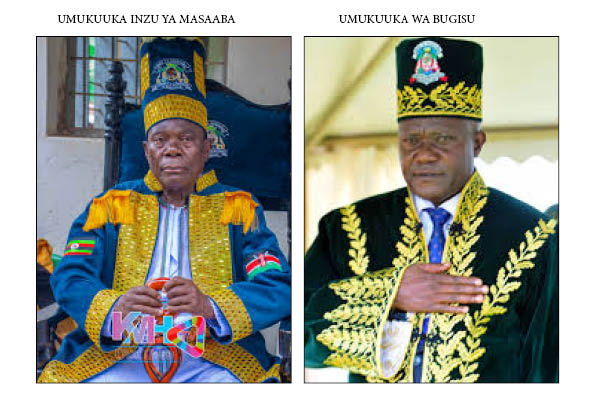
There persists a growing misconception within the Bugisu region that because Mr. Jude Mike Mudoma, who is the gazetted Umukuka, is the only lawful or “official” cultural leader, and that the recognition and operation of HH Jorum Mayatsa as Umukuka under Inzu Ya Masaba (IYM) Cultural Institution is unlawful.
This position is legally incorrect. It reflects a fundamental misunderstanding of the Constitution of the Republic of Uganda, 1995, and the Institution of Traditional or Cultural Leaders Act. This clarification therefore sets out the correct legal position and addresses the misconception directly.
Constitutional Foundation of Cultural Leadership
Article 246(1) of the Constitution provides that traditional or cultural leaders may exist in ANY area of Uganda in accordance with the customs, traditions, wishes and aspirations of the people concerned.
The law further provides that a cultural leader is one recognised by the community in accordance with those customs and traditions.
The Constitution therefore establishes that:
Cultural institutions originate from the people
Legitimacy is derived from custom, tradition, and community recognition
The State does not create cultural authority but only recognises it
There is no provision in Article 246 that creates a single, exclusive, or monopolistic cultural leader over a people like Mr Jude Mudoma is trying to insinuate
Statutory Position Under Cap. 242
Under Sections 2 and 3 of the Institution of Traditional or Cultural Leaders Act, the law provides for the recognition of traditional or cultural leaders in accordance with the Constitution and customary practices.
Section 6 further provides that the institution of the traditional or cultural leader (Office/throne/authority), (not the cultural leader/office bearer) is a corporation sole, a doctrine intended only to ensure continuity of the office/cultural institution and enable it to hold property and transact legally.
Importantly:
The Act regulates recognition and administration
It does not create cultural institutions
It does not grant exclusive authority over a people
It draws a clear distinction between the institution of the traditional or cultural leader (Office) and the traditional and cultural leader (office bearer)
It does not criminalise the existence of parallel or competing customary structures
There is no provision in the Constitution or in Cap. 242 that makes it a crime for a group of people to recognise or declare a cultural leader in accordance with their customs and aspirations.
On the contrary, Article 246 expressly protects this right.
Accordingly:
The recognition of Mr. Jorum Mayatsa as Umukuka under IYM cultural institution is not unlawful
It does not constitute a criminal act
It falls squarely within the constitutional rights of the Bamasaba people to organise culturally
Any suggestion that such recognition is illegal has no basis in law
Gazettement Does Not Create Monopoly
Gazettement under Cap. 242 is an administrative act of State recognition.
Its legal effect is limited to:
Facilitating interaction with government
Providing formal acknowledgement for administrative purposes
It does not:
Create cultural authority
Create cultural monopoly
Give the cultural leader political, administrative and legislative powers
Extinguish other customary claims
Grant exclusive ownership of cultural identity
Prevent other groups from organising culturally
To interpret gazettement as creating the only lawful cultural leader is to misread both the Constitution and the statute.
Comparative Cultural Practice in Uganda
The position that multiple cultural authorities may exist in ANY area is well established in Uganda.
In Buganda:
The Kabaka exists as the central cultural leader
However, other recognised cultural leaders exist within and around the region, including Sabaruli, Sabanyala, and Kamuswaga, each representing distinct communities with their own cultural identity
In Busoga:
The Kyabazinga is recognised as a unifying figure
At the same time, sub-groups such as the Bakenyi have exercised their cultural autonomy by electing their own cultural leader, who is to be based in Luuka District
These examples demonstrate that:
Cultural plurality is a recognised reality
Cultural authority is not monopolised
Communities retain the right to organise around their own identity and leadership
Application to the Bamasaba–Bugisu Context
Applying the Constitution and Cap. 242 to the Bamasaba-Bugisu context:
The gazettement of Mr. Jude Michael Mudoma does not invalidate other cultural expressions
It does not extinguish the historical and customary existence of Inzu Ya Masaba (IYM)
It does not prohibit sections of the Bamasaba from recognising Mr. Jorum Mayatsa
The legitimacy of IYM arises from:
Customary foundation
Community recognition
Constitutional protection under Article 246
It is necessary to caution against actions that attempt to:
Force allegiance to a single cultural authority
Intimidate members of the community
Interfere with lawful cultural activities of IYM
Such actions are inconsistent with:
Article 246 of the Constitution
The spirit and intent of Cap. 242
No individual or institution has the legal authority to compel cultural allegiance or suppress alternative customary expressions.
The legal position is clear:
Cultural leadership in Uganda is grounded in custom and the will of the people
Gazettement under Cap. 242 is administrative recognition, not exclusive authority
There is no legal monopoly over cultural leadership
Multiple cultural institutions may coexist where grounded in custom and it’s not a crime
Accordingly, the existence and operation of Inzu Ya Masaba (IYM) and the recognition of Mr. Jorum Mayatsa are lawful under the Constitution and the laws of Uganda.
By: Stephen Mutinyu
Solicitor General, Inzu Ya Masaba (IYM) Cultural Institution