 Kadodi Media House Your media place

By Our Staff Reporter
Kampala, Uganda | September 19, 2026
Senior Presidential Advisor on Political Mobilisation Mr. Moses Byaruhanga has called on government agencies to increase procurement of medicines from Ugandan pharmaceutical manufacturers, saying greater support for local producers will create jobs, conserve foreign exchange and strengthen the country’s industrial base.
Byaruhanga made the call during a meeting with the leadership of the Uganda Pharmaceutical Manufacturers Association (UPMA) and the State House medical team at Serena Hotel in Kampala.
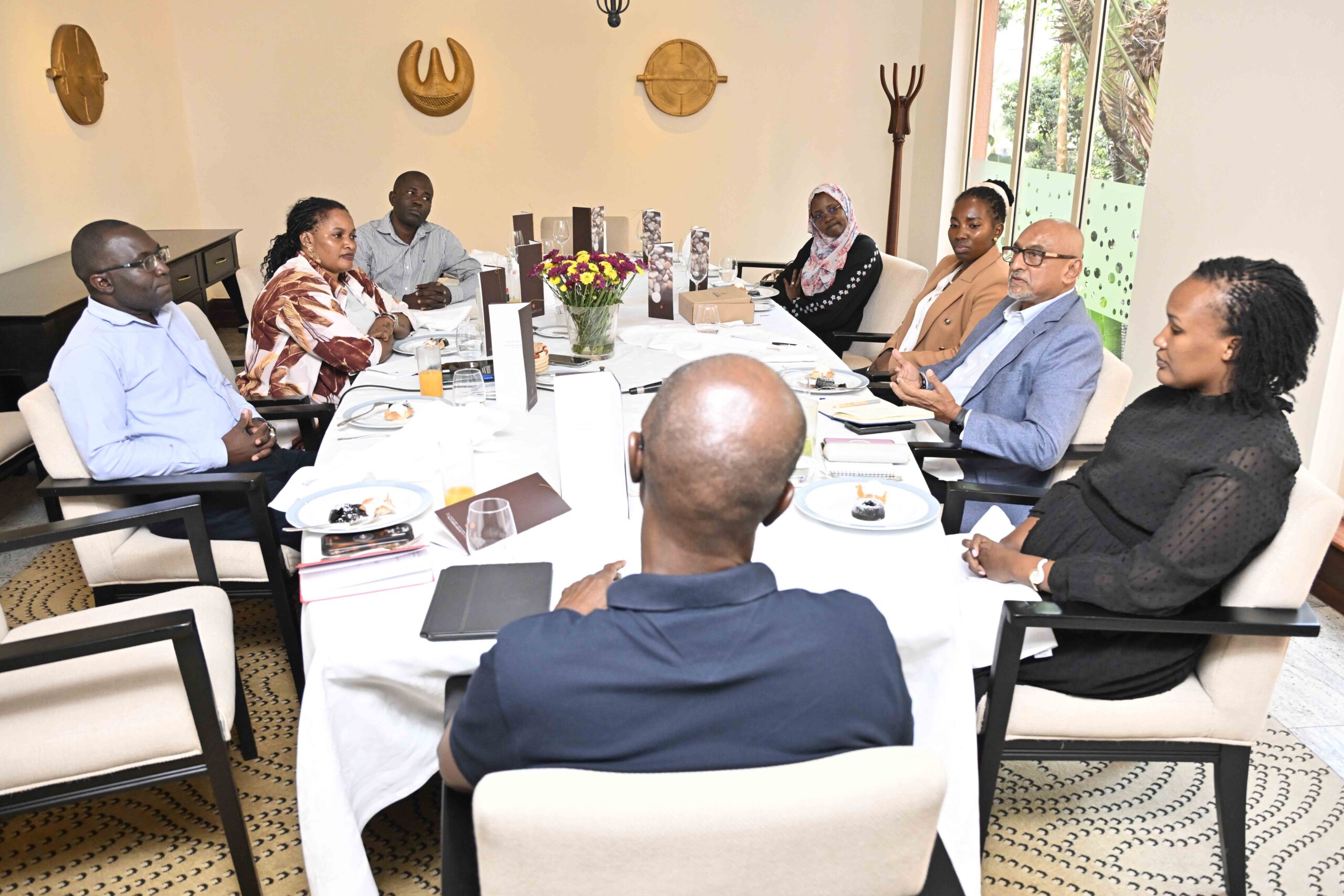
The meeting reviewed progress in the government’s policy of supporting domestic pharmaceutical manufacturers and discussed challenges affecting the growth and competitiveness of Uganda’s pharmaceutical industry.
Byaruhanga said his engagement with the pharmaceutical sector dates back to 2015, when he met local manufacturers while contributing to preparations for the 2016 presidential elections.
He recalled that at the time, the National Medical Stores (NMS) had a budget of about Shs110 billion, equivalent to approximately US$70 million, but only between five and 10 percent of its procurement was sourced from local pharmaceutical manufacturers.
He said the situation raised questions about why Ugandans were not investing sufficiently in a pharmaceutical industry that had a guaranteed government market.
According to Byaruhanga, local manufacturers at the time complained of unfair competition because government procurement involved international bidding, exposing Ugandan firms to competition from manufacturers in countries such as India and China, where producers benefit from economies of scale.
Domestic procurement policy boosts local industry
Byaruhanga said the concerns were subsequently presented to President Yoweri Kaguta Museveni, who in 2016 directed that medicines manufactured locally should be procured through domestic bidding.
He said the policy was intended to create a reliable market for local manufacturers, support job creation and increase the use of locally available utilities and raw materials.
“The purpose was to create a market for the domestic manufacturers, which could create domestic and local jobs, and also use local utilities like electricity, water and using local raw materials where possible,” Byaruhanga said.
He said the policy has since resulted in a significant increase in government procurement from local pharmaceutical companies.
According to Byaruhanga, local procurement by NMS increased from about five percent at the time of the initial engagement to 60 percent in the Financial Year 2024/25.
He added that by March 2026, NMS had already procured approximately 64 percent of its medicines from local manufacturers during the 2025/26 financial year.
The increase, he noted, came as the NMS budget expanded from approximately US$70 million in 2015 to nearly US$200 million.
“Now we are spending more locally, instead of taking all the dollars outside the country and also creating more jobs,” he said.
Call to expand locally manufactured medicines
Despite the progress, Byaruhanga said government needs to address emerging challenges if the gains made in the pharmaceutical sector are to be sustained.
He said the State House medical team had raised concern that the list of pharmaceutical products, or molecules, eligible for domestic procurement had remained at 37 for nearly a decade, despite growth in the local industry and the increasing availability of locally manufactured medicines.
Byaruhanga said President Museveni’s directive was not intended to restrict domestic procurement to a fixed list of products.
“The President’s directive did not limit the list. It said anything locally manufactured, the government doesn’t import. And that must be maintained,” he said.
He directed that the matter be followed up with relevant government agencies to ensure that locally manufactured medicines meeting the required quality standards receive priority in government procurement.
Byaruhanga calls for fair competition among local manufacturers
Byaruhanga also addressed concerns surrounding off-take agreements, saying such arrangements should not create monopolies by giving a single local manufacturer exclusive access to a government market for medicines already produced by other Ugandan companies.
He said the agreements could instead be used to encourage investment in pharmaceutical products and molecules that are not currently manufactured locally.
“We want fair competition among local manufacturers. The off-take agreement can work easily if something is not locally manufactured,” Byaruhanga said.
He further said government would engage the Uganda Revenue Authority (URA) and the Uganda National Bureau of Standards (UNBS) over tax and regulatory challenges affecting pharmaceutical manufacturers.
Among the concerns is the cost of importing specialised equipment required for pharmaceutical production.
Byaruhanga said the concerns raised by UPMA would be followed up with the relevant government institutions.
State House establishes pharmacy desk
The Senior Presidential Advisor also announced that State House is strengthening its engagement with the pharmaceutical industry through a dedicated pharmacy desk.
He said the desk would provide a platform for continuous engagement between the State House medical team and pharmaceutical manufacturers as government works to address outstanding challenges affecting the industry.
Pharmaceutical manufacturers highlight industry contribution
Speaking on behalf of UPMA, the association’s chairman and Managing Director of Rene Industries, Mr. Rishi Vadodaria, thanked Byaruhanga and the State House medical team for engaging local pharmaceutical manufacturers.
Vadodaria said UPMA represents more than 20 pharmaceutical manufacturers, with combined investments exceeding US$500 million.
He said the industry directly employs more than 5,000 Ugandans and supports more than 20,000 people indirectly.
According to Vadodaria, local pharmaceutical manufacturers also support other industries through the purchase of packaging materials, bottles, corrugated boxes and other locally produced inputs.
He said Ugandan manufacturers produce a wide range of pharmaceutical products, including tablets, capsules, liquids, external preparations, veterinary products, injectables, syringes and other surgical implements.
Vadodaria commended government’s Buy Uganda, Build Uganda (BUBU) policy and domestic procurement arrangements, saying they had contributed to the growth of Uganda’s pharmaceutical manufacturing industry.
UPMA calls for expansion of procurement list
Vadodaria appealed to government to review and expand the list of 37 pharmaceutical molecules eligible for domestic procurement to at least 100, saying this would allow local manufacturers to supply a wider range of medicines to the market.
He also asked government to review the application of off-take agreements where they affect manufacturers already producing the same medicines locally.
The UPMA chairman further raised concerns over taxes imposed on specialised clean-room equipment used in pharmaceutical manufacturing.
He said the additional costs increase the capital burden on investors, noting that establishing a new pharmaceutical manufacturing facility can require an investment of between US$8 million and US$10 million.
According to Vadodaria, import duties, VAT and withholding tax on specialised equipment can therefore add significantly to the cost of establishing pharmaceutical manufacturing facilities.
The meeting was attended by other UPMA representatives, including Dr. Adrian Kivumbi Ddungu, Secretary General and Executive Manager of DEI BioPharma; Mr. Ramesh Babu, Managing Director of Abacus Parenteral Drugs Ltd; Dr. Sam Kitatta of ORO Pharma Group under the National Enterprise Corporation (NEC); and Ms. Irene Mbabazi, Personal Assistant to the UPMA chairman.
The State House medical team included Senior Pharmacist Dr. Esther Kisakye, Senior Presidential Advisor on Pharmacy Dr. Margaret Naluyima and Paediatrician Dr. Sekina Hussein, among others.