 Kadodi Media House Your media place
By Our Staff Reporter
UGANDA | 28 AUGUST 2026
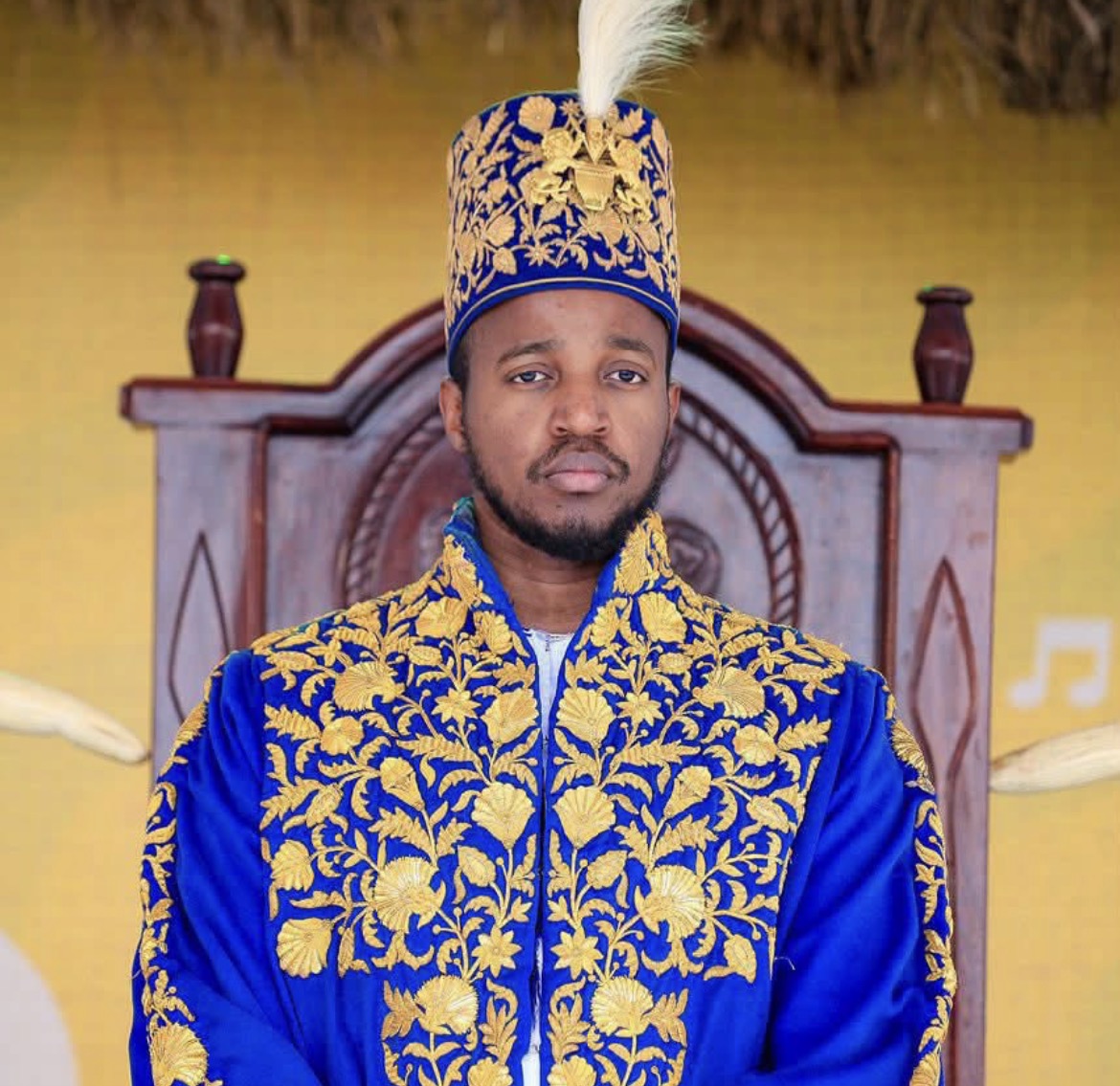
Uganda and the wider East African cultural community are mourning the passing of Rukirabasaija Omukama Oyo Nyimba Kabamba Iguru Rukidi IV, the youthful King of Tooro whose extraordinary life became almost inseparable from the throne he inherited as a small child.
Tooro Kingdom Prime Minister Calvin Armstrong Rwomiire Akiiki announced late on Thursday night, 27 August 2026, that King Oyo had died at approximately 10:00 p.m., calling it a moment of profound sadness for the Kingdom. He was 34, and his reign had lasted nearly 31 years.
The King had been receiving medical treatment in the United States after being reported critically ill earlier that day; the Kingdom has not officially disclosed the cause of death, though several outlets have cited sources pointing to a battle with cancer. In a striking twist of history, his passing came exactly 31 years and a day after his own father’s death.
Tooro’s Prime Minister confirmed that the Crown’s continuity is assured: King Oyo leaves behind a prince as his heir, whose identity will be formally revealed in due course, in accordance with the traditions and customs of Tooro Kingdom.
A CHILD CALLED TO THE THRONE
Born on 16 April 1992, King Oyo’s life changed dramatically following the sudden death of his father, Omukama Patrick David Matthew Kaboyo Olimi III, of a heart attack on 26 August 1995.
On 12 September 1995, at only three years old, the young prince was enthroned as Omukama of Tooro — a distinction that earned him recognition in the Guinness World Records as the world’s youngest reigning monarch.
Because of his tender age, senior members of the Royal Family and regents guided the affairs of the Kingdom during his childhood. His mother, Queen Mother Best Kemigisa, played a particularly important role in his upbringing and preparation for the enormous responsibilities ahead.
Yet even with a crown on his head, Oyo still had to grow up. He went to school, interacted with other young people, and eventually pursued higher education in the United Kingdom, graduating with a degree in Business Management. On his 18th birthday, on 17 April 2010, he formally assumed full operational duties as King at a ceremony in Fort Portal a milestone that drew international attention to a monarch the world had watched grow from infancy.
When he reached adulthood, the little boy whom the world had once watched sitting on the royal throne gradually assumed the responsibilities of an adult cultural leader, becoming, in later years, a recognised voice on the global stage, including engagements tied to United Nations peace and youth initiatives.
FROM CHILD KING TO DEVELOPMENT CHAMPION
King Oyo understood that cultural leadership in modern Africa could not survive on ceremonies and history alone. Culture had to speak to the challenges facing ordinary people.
His reign therefore increasingly associated the Tooro cultural institution with youth empowerment, education, agriculture, health, tourism, environmental conservation, cultural preservation and economic development.
He encouraged young people to acquire practical skills, embrace agriculture, develop businesses and look beyond formal employment for economic opportunities.
In 2021, he launched the Tooro Kingdom Vision 2045, providing a long-term framework touching on culture and heritage, agriculture, employment, tourism, health, environmental protection, youth development and poverty reduction.
King Oyo also became an important voice in the fight against HIV/AIDS and used his position to promote health awareness among young people.
A LESSON FOR AFRICA’S CULTURAL INSTITUTIONS
King Oyo’s life carries a message extending beyond Tooro.
Across Africa, traditional and cultural institutions are confronted with an important question: how can ancient institutions remain relevant to a young and rapidly changing population
King Oyo demonstrated that preserving culture does not require rejecting modernity. A cultural leader can protect language, customs, heritage and identity while simultaneously promoting education, entrepreneurship, agriculture, technology, environmental protection and development.
His life therefore offers an important lesson to cultural institutions throughout Uganda and East Africa, including the communities of the greater Mt. Elgon region. Our cultural institutions are strongest when they become bridges between our ancestors and our children; between heritage and development; and between identity and economic transformation.
NEARLY AN ENTIRE LIFE ON THE THRONE
The numbers alone tell an extraordinary story.
King Oyo became Omukama at three. At 18, he began assuming full operational responsibility for the Kingdom. He died at 34 — meaning he had spent nearly 31 of his 34 years as King.
For an entire generation of Batooro, Oyo was not simply one of their kings — he was the King they grew up knowing. They watched a small child dressed in royal regalia grow into a young man carrying the identity, history and aspirations of his people. Tooro is one of Uganda’s five constitutionally recognised traditional kingdoms, and it now enters a period of transition as it prepares to receive its next Omukama.
King Oyo’s passing at only 34 is painful, but the significance of his life cannot be measured merely by the number of years he lived. His was an extraordinary journey a child entrusted with a crown, a young man who grew into its responsibilities, and a cultural leader who spent virtually his entire remembered life carrying the heritage of his people.
The boy became a King. The King became a symbol. And the symbol now becomes part of Uganda’s history.
Kadodi Media House celebrates the life, reign and cultural legacy of Omukama Oyo Nyimba Kabamba Iguru Rukidi IV.
May His Majesty rest in eternal peace.
KADODI MEDIA HOUSE
Promoting Culture • Heritage • Unity • Development