 Kadodi Media House Your media place
By Our Staff Reporter
MBALE-UGANDA-Sunday, 19 July 2026
A special assembly at Mutoto, a stalled institution, and a court battle in the background this is how Inzu Ya Masaaba finally settled on its third cultural king.
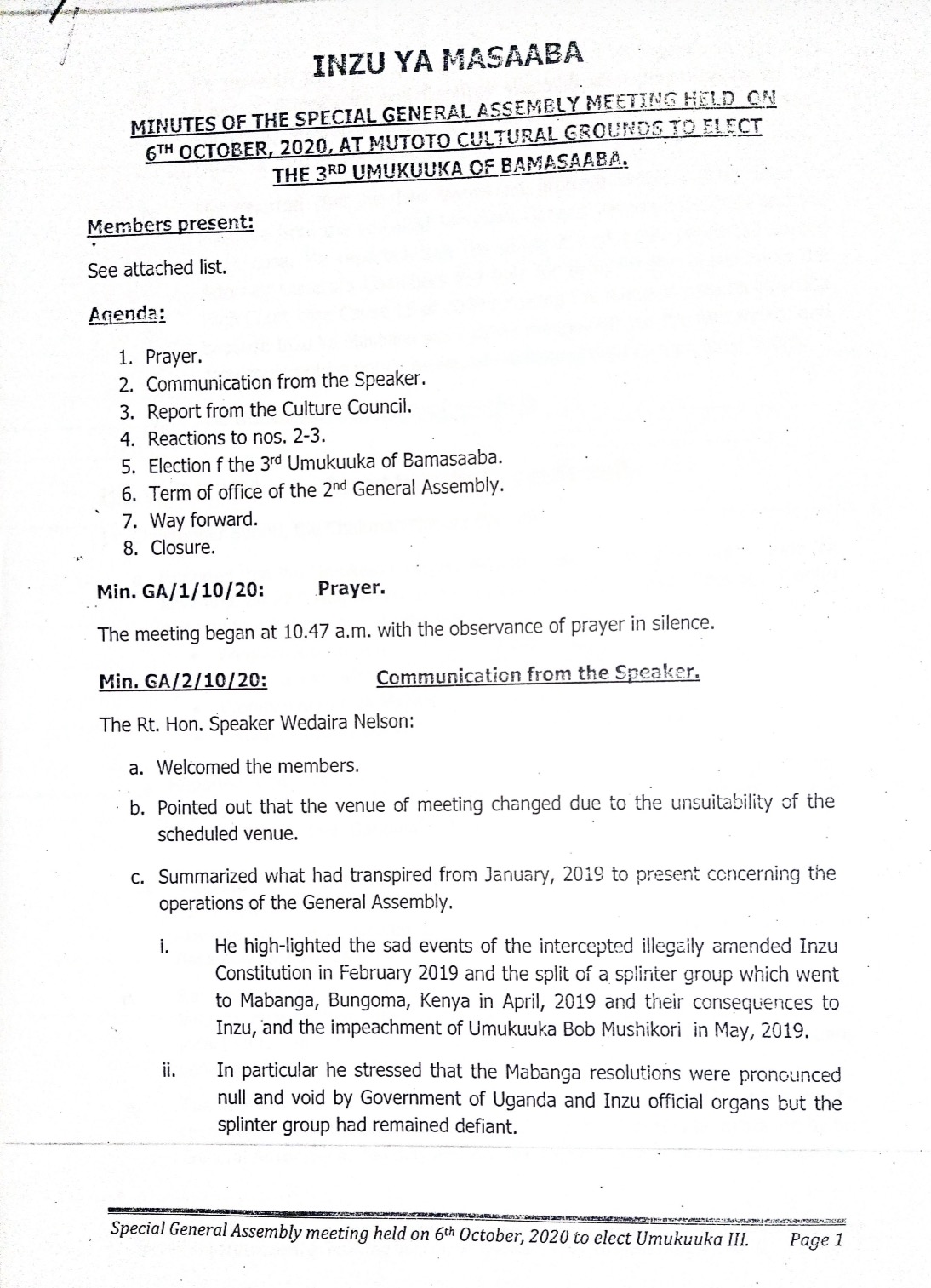
For nearly a year and a half, Inzu Ya Masaaba — the cultural institution of the Bamasaaba people sat without a functioning Umukuuka. Umukuuka Bob Mushikori had been impeached in May 2019, a splinter faction had broken away to Mabanga in Bungoma, Kenya, and an illegally amended Inzu constitution had thrown the institution’s leadership into confusion. Court cases piled up. The search for a new king stalled.
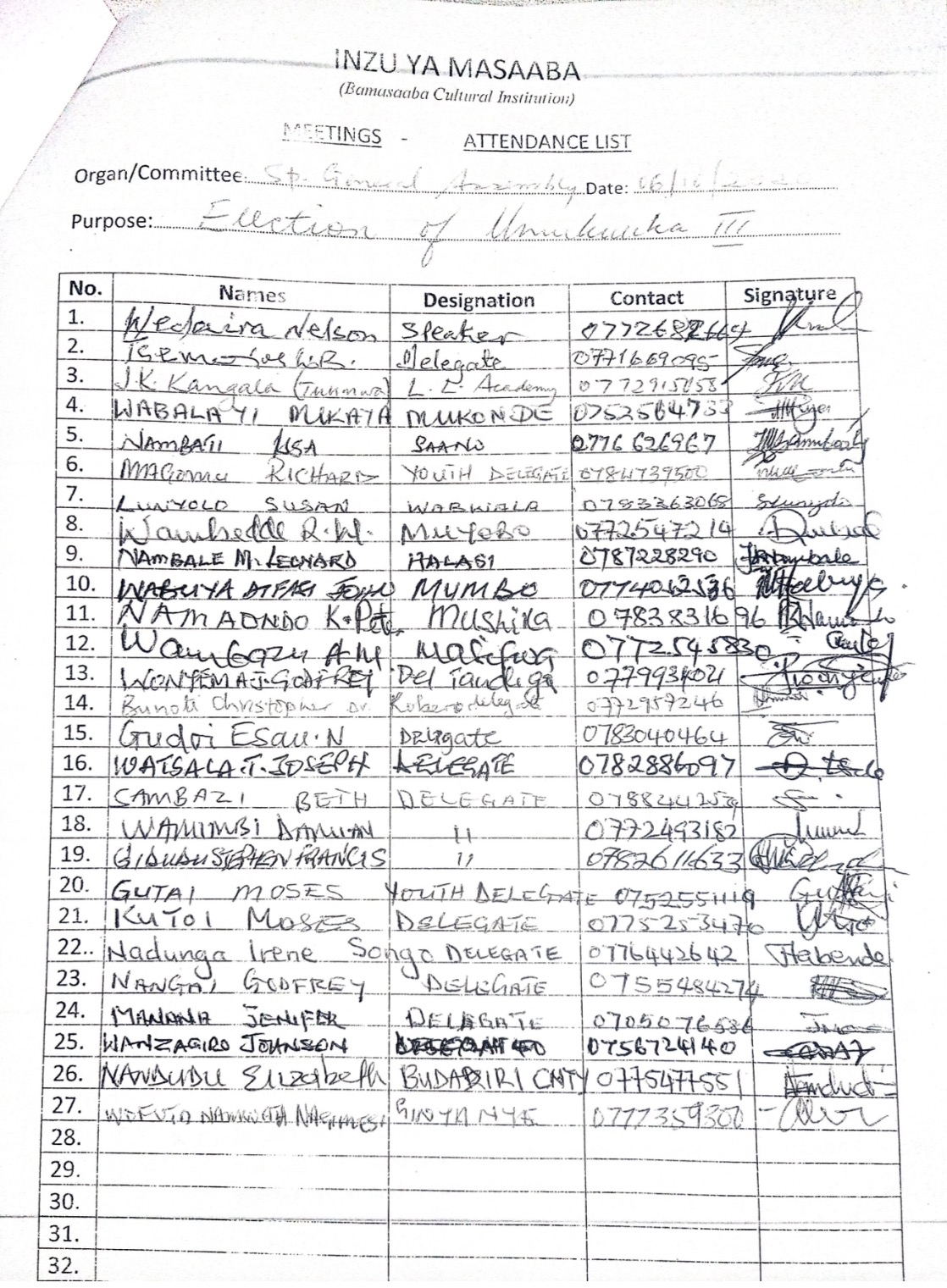
That changed on 6th October 2020, when delegates gathered at Mutoto Cultural Grounds for a Special General Assembly with one item dominating the agenda: electing the third Umukuuka of Bamasaaba.
A Troubled Backdrop
Opening the meeting, Rt. Hon. Speaker Wedaira Nelson used his communication to the house to lay bare just how difficult the road had been. He recounted the 2019 constitutional crisis, the Mabanga resolutions that a breakaway group had tried to force through resolutions the Ugandan government and Inzu’s own organs later declared null and void — and a High Court suit filed by a man claiming to be Inzu’s Secretary General, a claim the Speaker said he had formally disowned by sworn affidavit.
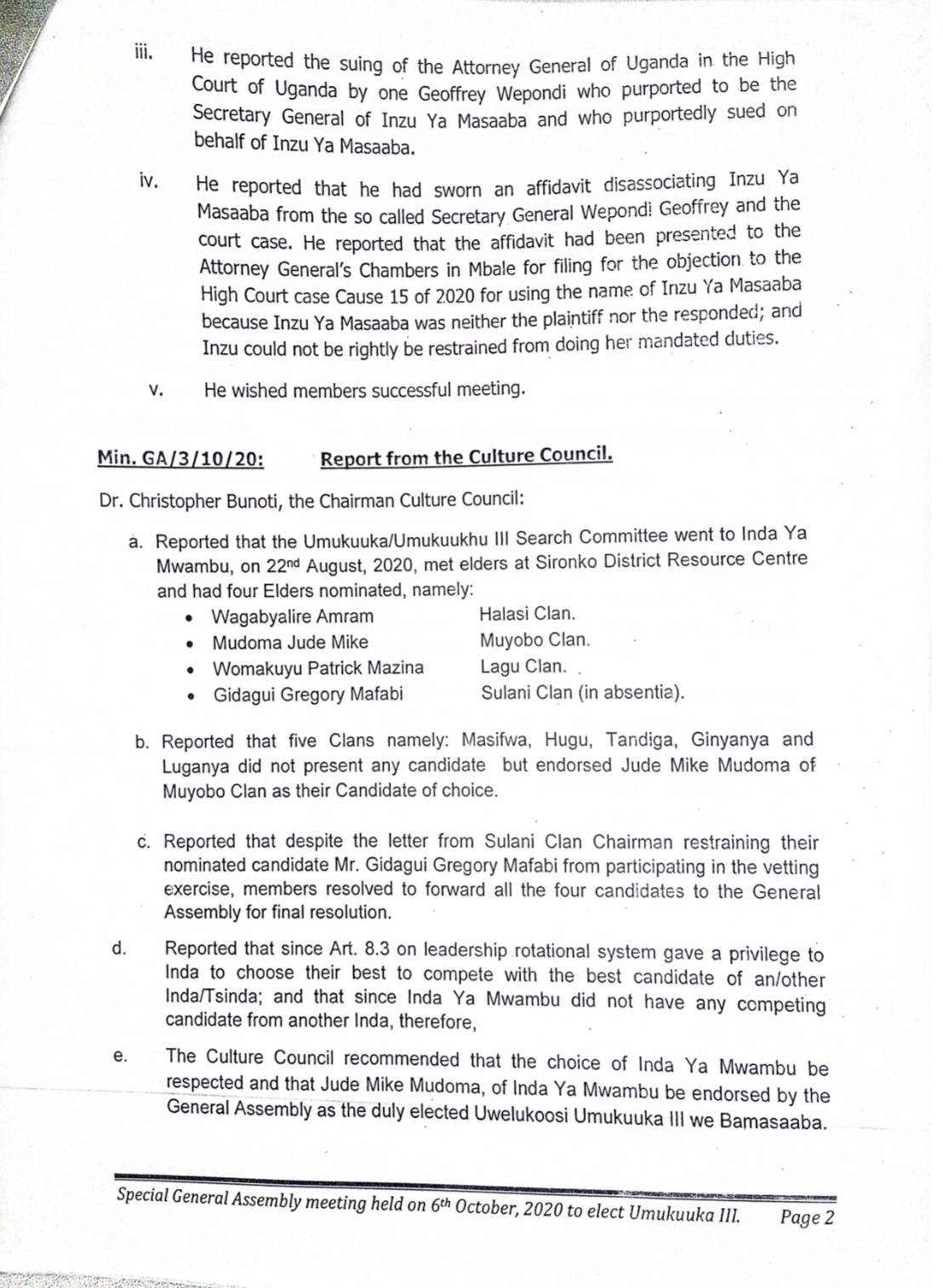
It was against this backdrop that the Culture Council, chaired by Dr. Christopher Bunoti, presented its findings. A search committee had visited Inda Ya Mwambu in August 2020 and returned with four nominated elders from four clans. But five other clans, the Council reported, had opted not to field their own candidates — instead throwing their weight behind one name: Jude Mike Mudoma of the Muyobo Clan.
Citing the constitution’s rotational leadership provisions, and noting that Inda Ya Mwambu had no rival Inda putting forward a competing candidate, the Culture Council recommended that Mudoma’s selection be respected and endorsed by the General Assembly.
The Vote
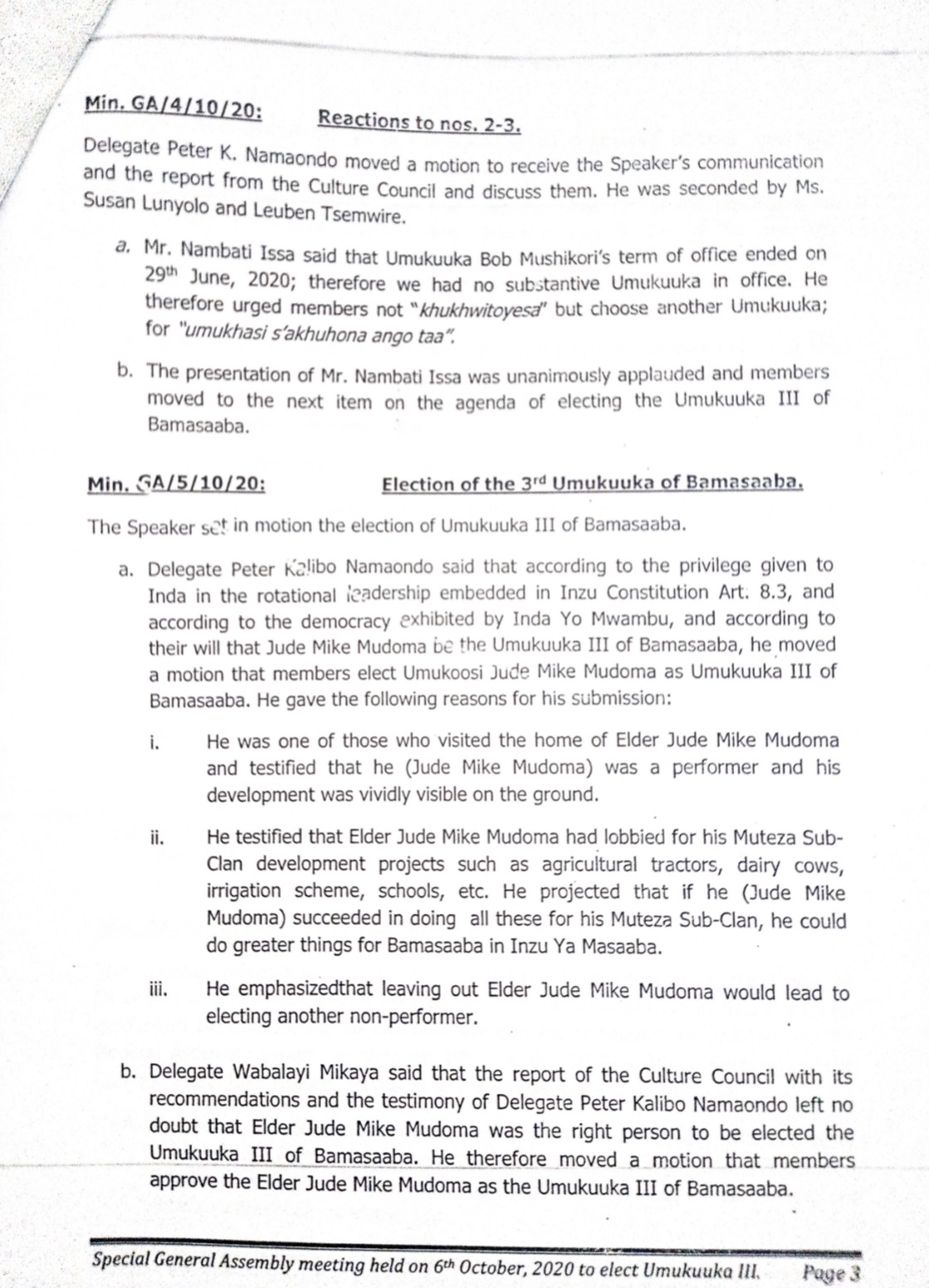
What followed was less a contest than a coronation. Delegate Peter Kalibo Namaondo moved the motion to elect Mudoma, telling the assembly he had personally visited Mudoma’s home and witnessed his record of development agricultural tractors, dairy cows, an irrigation scheme, schools delivered for his own Muteza Sub-Clan. If he could do that much for one sub-clan, Namaondo argued, imagine what he could do for all of Bamasaaba.
Delegate Wabalayi Mikaya seconded, moving that the assembly formally approve Mudoma’s election. The response was unambiguous.
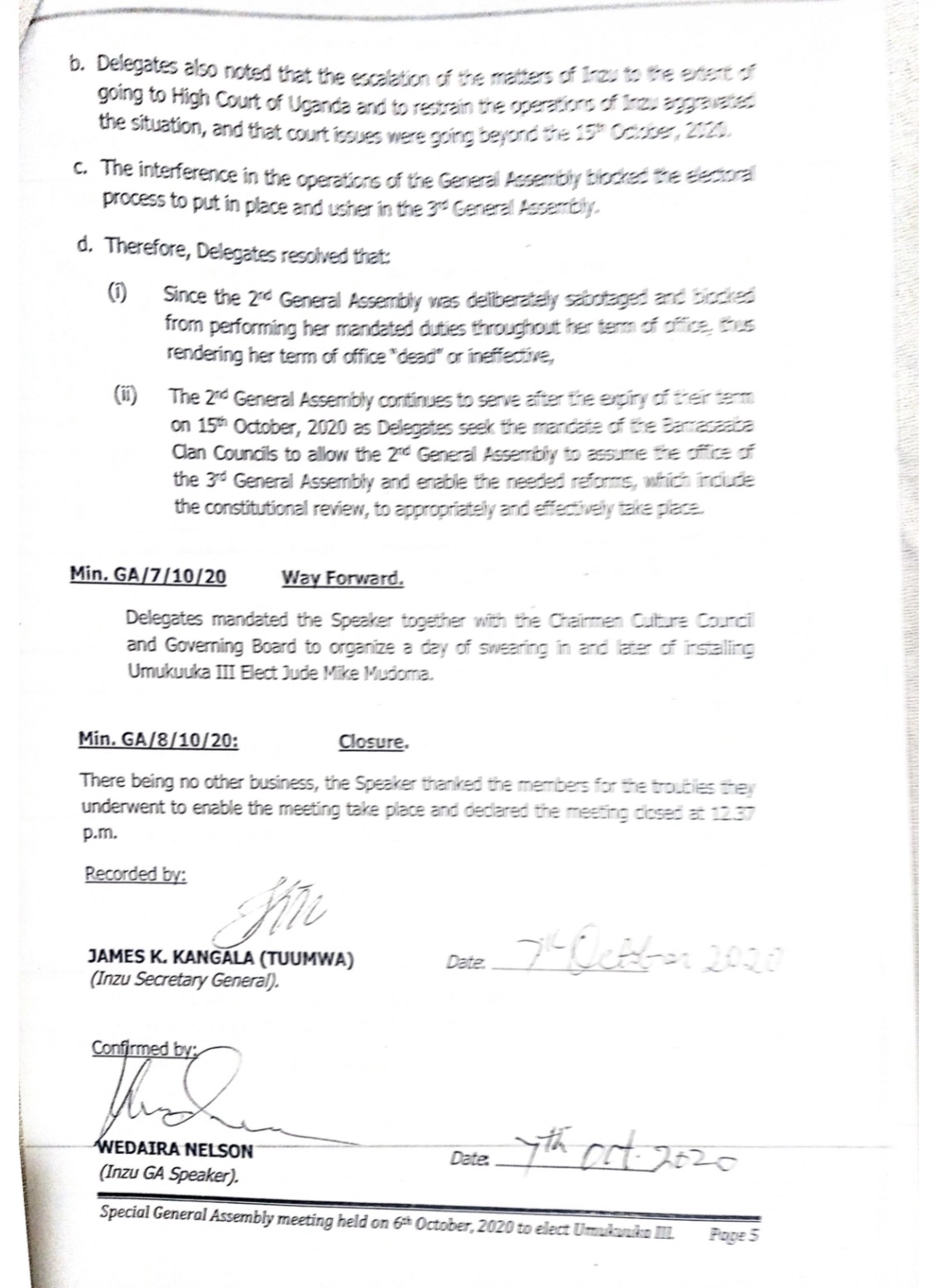
“Members overwhelmingly and in unison yelled in approval,” the minutes record. Mudoma was called into the hall and asked directly whether he accepted the task Bamasaaba wanted him to undertake. Visibly moved, he told delegates he was “overwhelmed by the love and trust Bamasaaba had in him,” thanked the electorate for a process he called far from simple, and pledged to work with “every talent of Bamasaaba” to keep unity and development alive during his tenure.
With that, Jude Mike Mudoma became Umukuuka III of Bamasaaba.
Extending a Mandate
The assembly did not stop at the election. Delegates also confronted an awkward technicality: the second General Assembly’s own five-year constitutional term, which began on 15th October 2015, was due to expire that same month. Rather than allow a leadership vacuum on top of a leadership vacuum, delegates resolved that since their term had been “deliberately sabotaged and blocked” by interference and litigation, the sitting Assembly would continue in office while seeking clan councils’ mandate to transition into a third General Assembly one tasked with pushing through constitutional reforms.
The Speaker and Culture Council were mandated to organize Mudoma’s swearing-in and installation.
Sworn In and Formally Communicated to Government
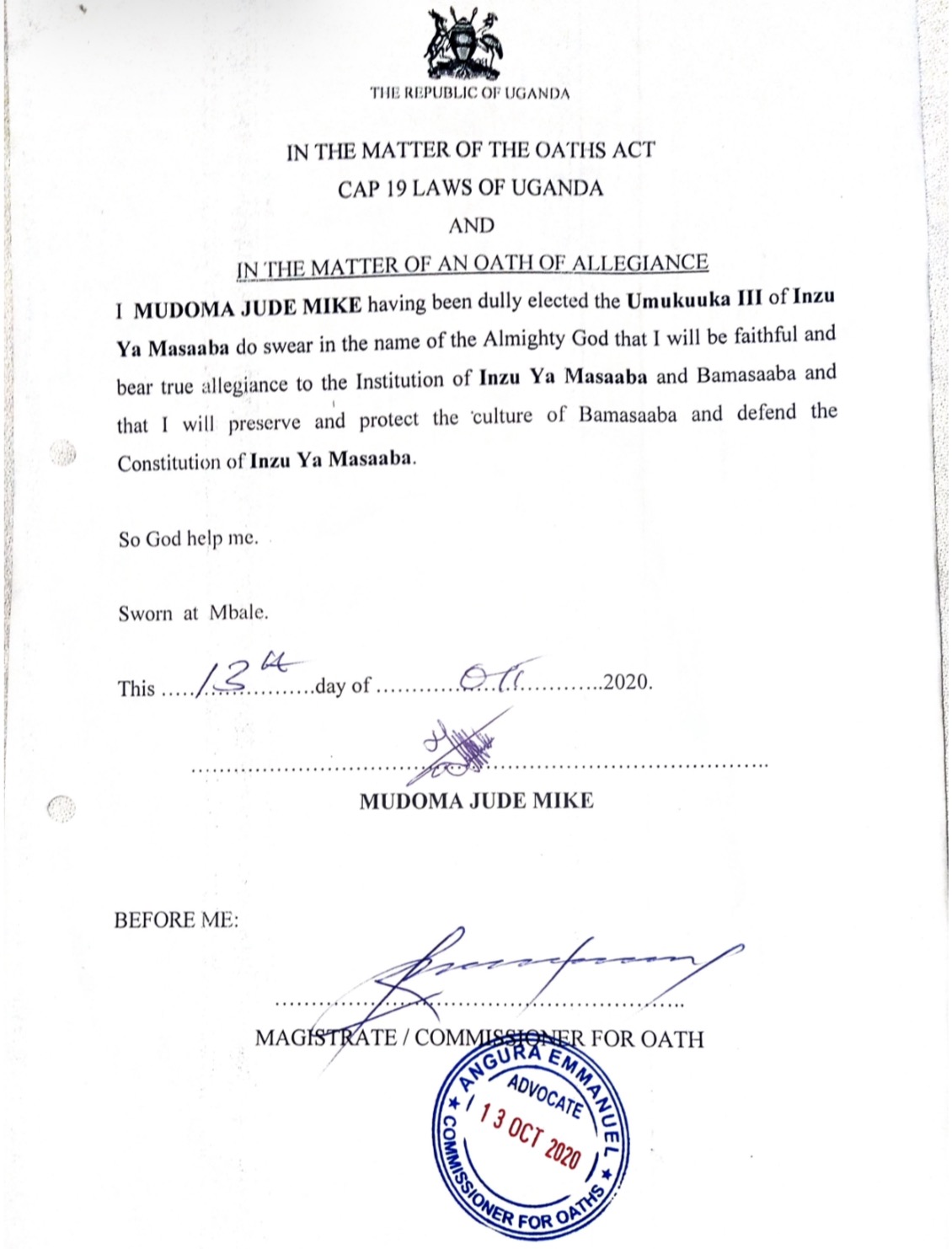
True to that mandate, Mudoma took his Oath of Allegiance on 13th October 2020 in Mbale, swearing before a Commissioner for Oaths to be “faithful and bear true allegiance to the Institution of Inzu Ya Masaaba and Bamasaaba” and to defend its constitution.
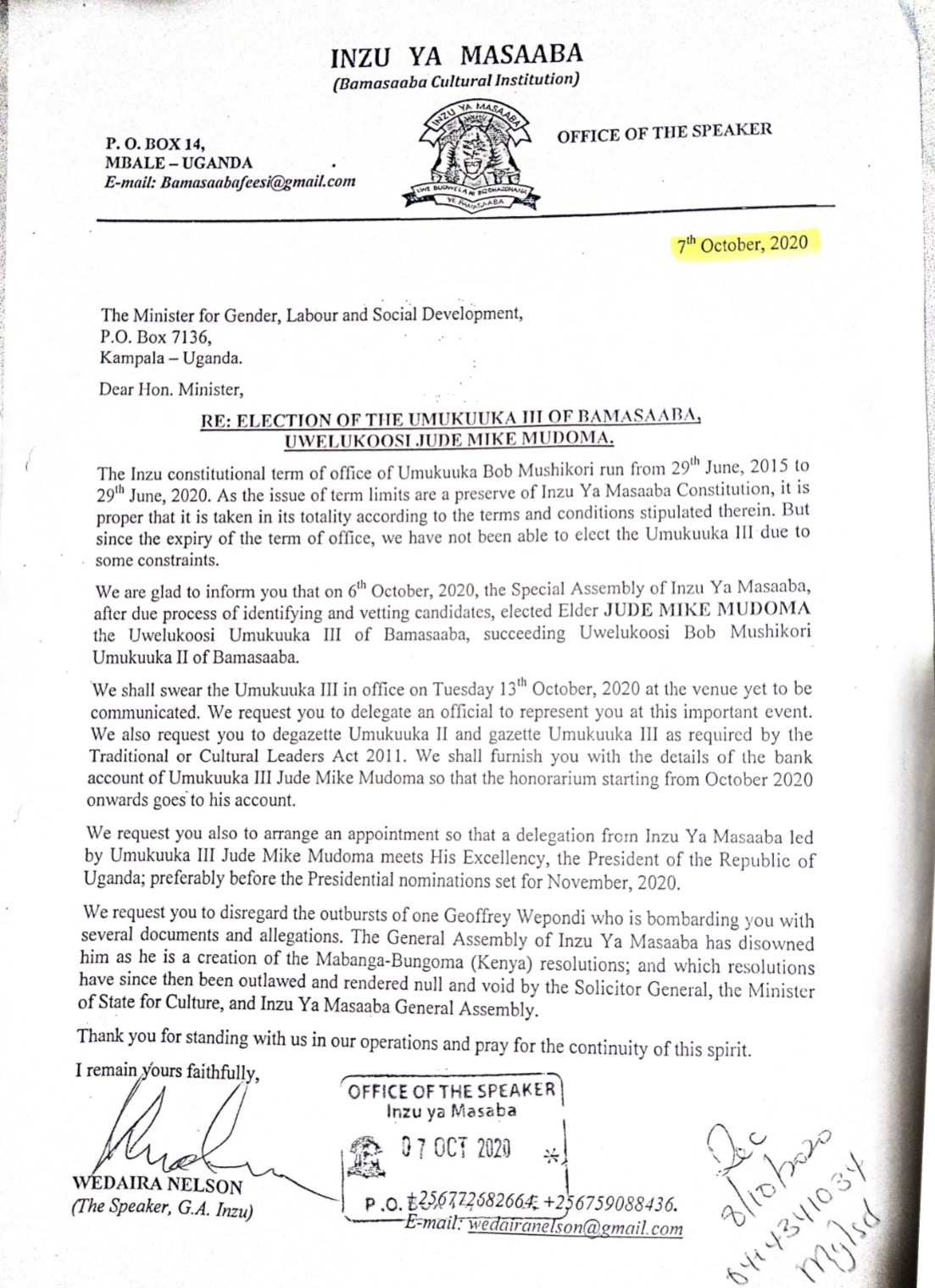
Two formal letters followed to cement the transition. The first, from Speaker Wedaira Nelson to the Minister for Gender, Labour and Social Development just a day after the vote, requested that government degazette outgoing Umukuuka Bob Mushikori and gazette Mudoma in his place under the Traditional or Cultural Leaders Act, 2011 and asked for an audience with the President ahead of that November’s presidential nominations. The letter also pointedly asked the Ministry to disregard “the outbursts of one Geoffrey Wepondi,” whom the General Assembly had disowned as a creation of the outlawed Mabanga-Bungoma resolutions.
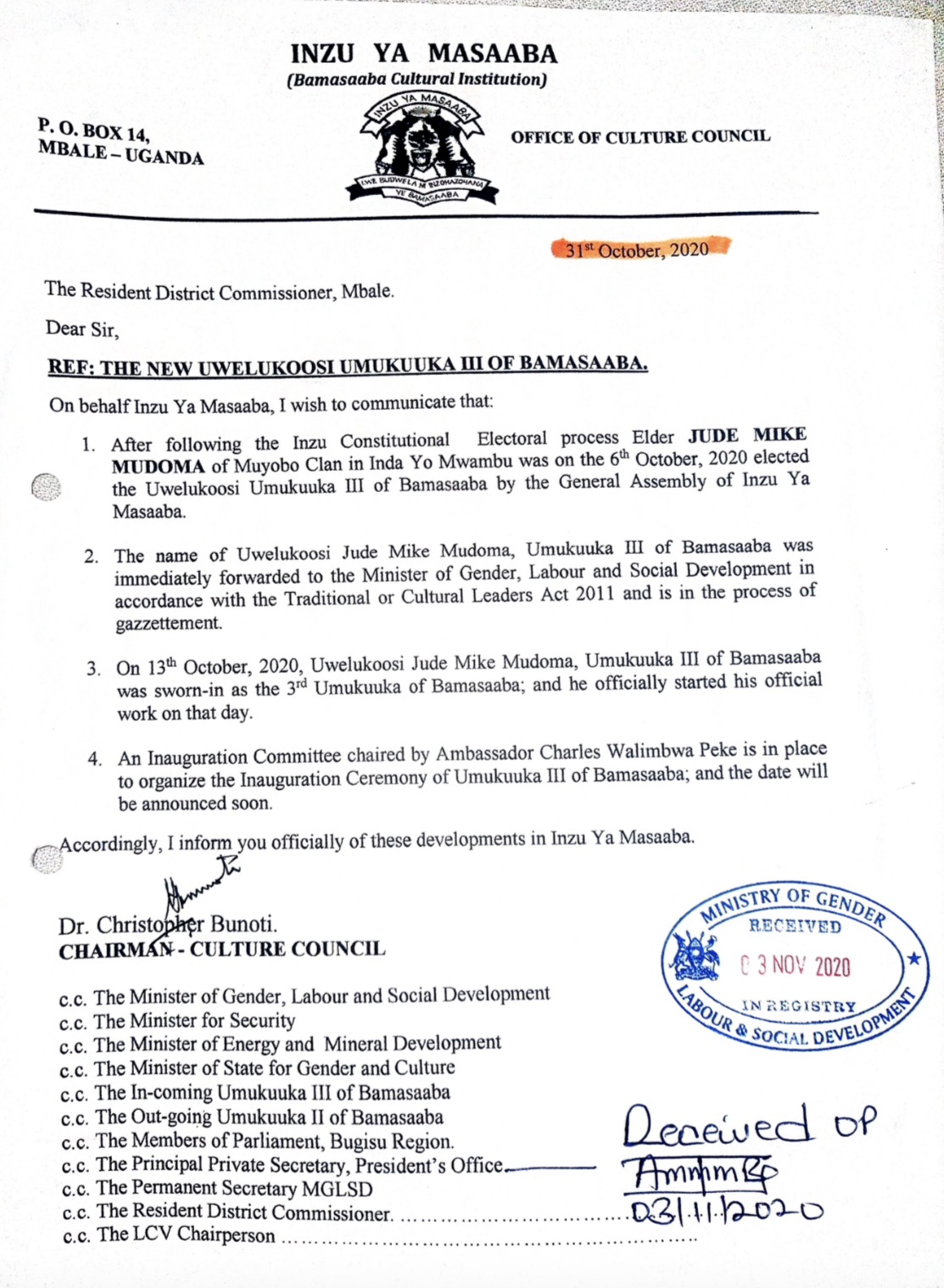
A second letter, from Culture Council Chairman Dr. Christopher Bunoti to the Resident District Commissioner of Mbale, confirmed the full sequence of events to a wide circulation list government ministers, Bugisu’s Members of Parliament, the outgoing and incoming Umukuukas, and the President’s Office along with news that an Inauguration Committee under Ambassador Charles Walimbwa Peke had been set up to plan a formal inauguration ceremony.
Why It Still Matters
The 2020 election of Umukuuka III did not happen in a vacuum it was Inzu Ya Masaaba’s answer to a genuine institutional crisis: an impeached predecessor, a breakaway faction, contested court cases, and an expired Assembly term. The documents from that day form a paper trail that continues to matter each time questions of legitimacy, succession, or rival claims to the Umukuuka title resurface in Bamasaaba politics.